Tag: sel

  • Remote Inquiry in PBL

    This is the third of a series of posts about what Project Based Learning infused with Social and Emotional Learning looks like when teaching remotely. Is it the ideal situation? Probably not, but it is the reality that many of us are dealing with. I will share my ideas and what others are doing to hopefully inspire you to action.

    Remote Inquiry in Project Based Learning might seem like a no-brainer-online research! But let’s think of inquiry in broader terms and consider some other ways to guide students of all ages to engage in inquiry throughout the project cycle. Curiosity is integral to any engaging project, and we can find many ways to build it even when we are not face-to-face.

    Literature

    Texts of all kinds can be research. From non-fiction to fiction; from poetry to graphic novels; from websites to magazines, our students should be exposed to a rich environment of texts. Many school libraries are finding ways for kids to pick up books during remote learning and there are many online books available for free. Make sure that your students are being exposed to a wide variety of authors and texts from diverse viewpoints.

    Expanded Research

    Too often students are only taught how to do the traditional research of a Google search or how to use peer reviewed journals at the secondary level. There are so many other things that students can research. They can consider primary source images in history and science using routines such as “I notice” and “I wonder.” They can analyze political cartoons, listen to podcasts, watch documentaries or other videos, take virtual field trips, or watch live webcams of natural events. Expanding research to include audio and video elements helps differentiate for English Learners and kids with special needs. It is engaging for ALL students!

    Interviews

    All sources ultimately go back to a person who either wrote it down, took a picture or video, or created some kind of artifact. So take your students directly to the source and have them conduct interviews. Students from Kindergarten to college can come up with their own questions based on the Driving Question (DQ) and talk to experts in the field. This person may have a degree at a prestigious university, or they may be a grand parent who remembers a time period in history. Experts are everywhere!

    One bonus of remote learning is that there is actually more access to people as pretty much everyone has experience with videoconferencing now and can quickly and easily “join” your class without having the past challenges of distance, travel, or taking off from work.

    Surveys

    We’re not talking about taking them, but having students create surveys around their project topic and then send them to the appropriate audience. This data collection is an important part of empathetic design thinking process. To help students to develop the SEL competency of Social Awareness, we need them to consider the DQ from multiple perspectives. Solutions to PBL should require that students address the whole community, especially those least privileged.

    Surveys bring a great tie into math as students can decide what kind of graph or chart best represents the data. The results require critical interpretation to be applied to any solution that kids are considering. Creating infographs is a great way for students to communicate their results with the public affected by the problem.

    Experiments

    Hands-on learning in PBL is a crucial way for kids to make their own meaning. Send home some instructions for experiments that they can try at home. Of course, make sure that the experiments are safe and inexpensive, but students can do many things at home with some parental guidance. If that is not an option, videotape yourself conducting the experiment at your home for student to observe. Better yet do it live so students can ask questions in real time. Another option are simulations such as PhET science page where students can play around virtually.

    Observations

    Like experiments, this is a great option to get students away from screens. Assign them tasks such as going out side and looking for living vs. non living things. They could be watching animals/insects in their neighborhood. Students could count traffic, notice Covid adaptations in their community, or document whether or not people are social distancing. Teaching students to have a keen eye for what is going on around them and then learning to interpret it is research too!

    What other ways are you having students inquire remotely?

    Questions? Interested in a PBL workshop or consulting?  Connect with me at michaelkaechele.com or @mikekaechele on Twitter.
  • Why I Hate Grading, But Love Assessment

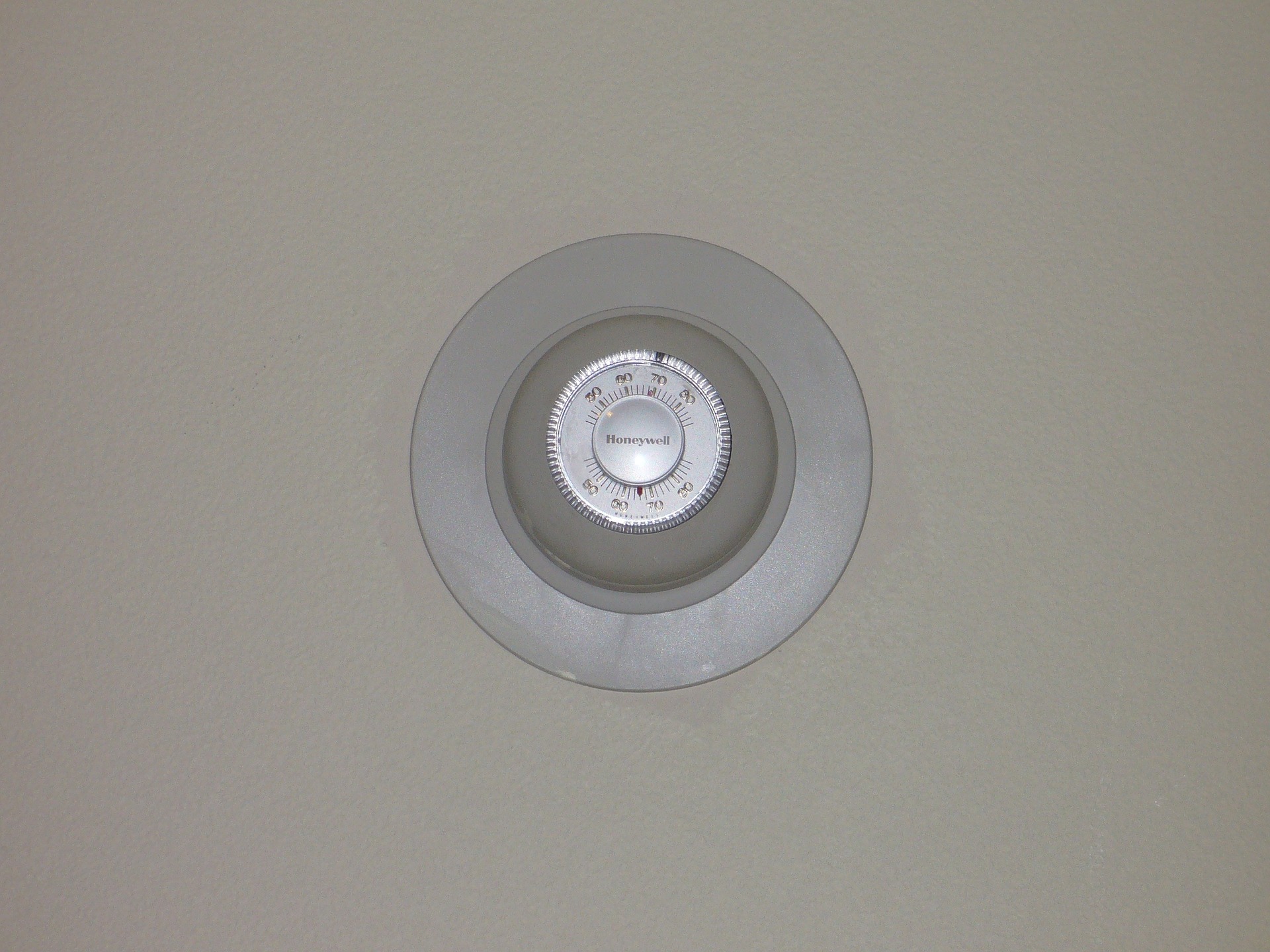
    Boring pic, but important analogy

    Assessment gets a bad rap. Volumes of books have been written over the years about assessment, but sometimes we overthink it. Assessment is a natural human behavior where we observe and evaluate situations or people. We all judge from a very young age and are doing it all of the time (you are judging my writing skills, or lack of them right now). Then we adjust our actions based on our assessments. When someone is angry, you either try to avoid them or placate them. Unless you are a glutton for punishment, you don’t try to make them more upset.

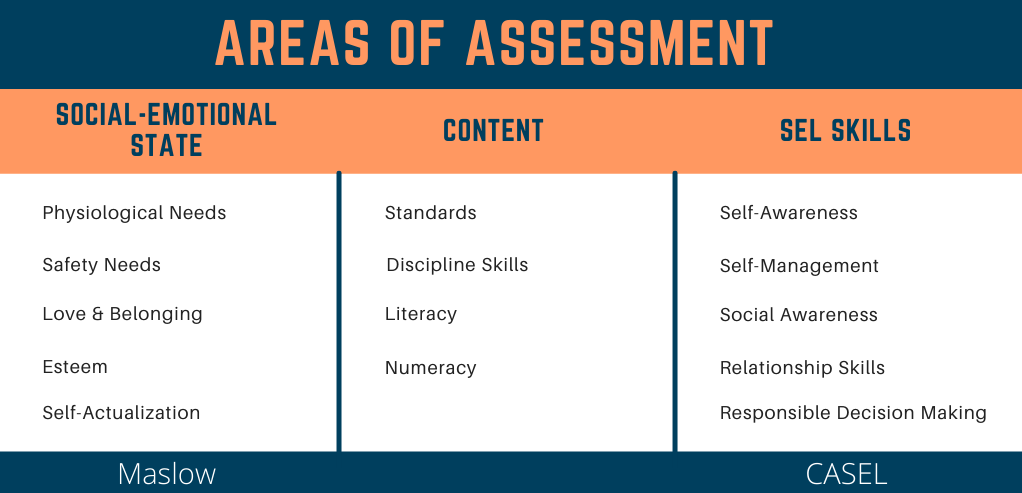
    When it comes to education, assessment is most often associated with standardized testing. Collective “Ugh.” But assessment should be viewed as a much wider category of actions. There are 3 areas that teachers should be assessing continuously.

    Social-Emotional State

    The social-emotional state of students has become the trendy thing to focus on during Covid. Maslow before Blooms is the battle cry of teachers everywhere. While I contend that we can Maslow while we Bloom, I do agree that we need to build relationships with kids and make sure that they are physically and mentally prepared to learn both content and SEL skills before we engage with them. We should be continually taking stock of students’ mental state, energy level, and sense of confidence.

    This is best achieved by checking in with each student daily. Whether you are greeting them at the door (or as they enter a virtual space) or just chatting with them during work time, every student needs to be personally acknowledges. It doesn’t need to be a lengthy or formal process, but more a culture of belonging. When one or more students are not prepared to learn, for any reason, address it first. This may be as simple as letting a student rest when tired or not feeling well, or sending them to a counselor if they are very distraught.

    Content

    Content was the only focus during NCLB. From teacher and principal evaluations to school “grades,” everything was based on improving test scores. While the pendulum swung too far in this direction, we don’t want to throw out the baby with the bath water. Content is still a critical part of our jobs. Through PBL, there are a myriad of ways to assess content beyond standardized multiple choice tests. Portfolios of student work from prototype to final products mixed with student reflections are an excellent window into their content knowledge and ability to apply it.

    Social and Emotional Learning Skills

    Social and Emotional Learning Skills are the trend of the future, partially in reaction to the over-obsession of content associated with standardized curriculum and testing. SEL goes beyond checking students mental state for trauma, to cultivating the SEL competencies into their lives. SEL skills are vital to successful careers and meaningful relationships, presenting a holistic approach to learning.

    In reality, these three areas are not distinct but interwoven with each other. The Esteem and Self-Actualization of Maslow overlap with the Self-Awareness and Self-Management of CASEL. All of the SEL competencies develop skills that lead to greater academic success in the content areas, including literacy and numeracy. The discipline specific skills of each content area are dependent on problem-solving, analyzing, and evaluating.

    Always Formative

    The largest shift isn’t from content to SEL (since both still matter), but from summative to formative. We know that one test score never represents the totality of what an individual knows. So we need to hold off on summative assessments for as long as possible and treat everything as a formative part of the learning process. This often means not putting a grade on student work but giving feedback in multiple forms leading to refinement by the student.

    Everything in the classroom is a formative assessment opportunity.

    We just have to view it that way. From conversations and observations to protocols, routines, scaffolds, and the structures of PBL, everything informs us in one or more of the three areas of assessment if we are paying attention.

    The reason that we assess in the first place is to adjust our teaching plans to our student needs. That’s why grading feels so senseless. It is often reporting scores for the purpose of ranking and sorting. But assessment is like a thermostat. We take the temperature of the room and then we adjust to the needs of our students. Ultimately the purpose of formative assessments is to help students drive their own independent inquiry.

    For example, let’s say many students aren’t participating in class. A traditional approach might be to start grading them with participation points, but that doesn’t fit into any of the three categories. Even worse, participation points reward the kids who were already working and punish the ones who weren’t, but they don’t inspire anyone. Instead assess the reasons that students aren’t participating. Are they bored, shy, or intimidated due to low skill level? What strengths are they “hiding” in class? Then design projects based on their strengths that develop their gaps. Formative assessments are our opportunity to know our students at a deep level and encourage them to become their best selves.

    Questions? Interested in a PBL workshop or consulting?  Connect with me at michaelkaechele.com or @mikekaechele on Twitter.