Author: Michael Kaechele

  • Direct Instruction in PBL

    I took my daughter to class today. It was the first one of what I expected to be a “hands on” class. But she had to sit and listen for a half hour before she did anything. It was an archery class, and before the instructor was going to give over a dozen, upper elementary students weapons in close corridors, he was going to make sure that they understood all of the safety rules.

    Archery is supposed to be fun, shooting at targets, instead she had to sit and listen to some direct instruction. There is a time and place for direct instruction and in this case it was a matter of safety. She did get to shoot later and next time she will get to shoot more.
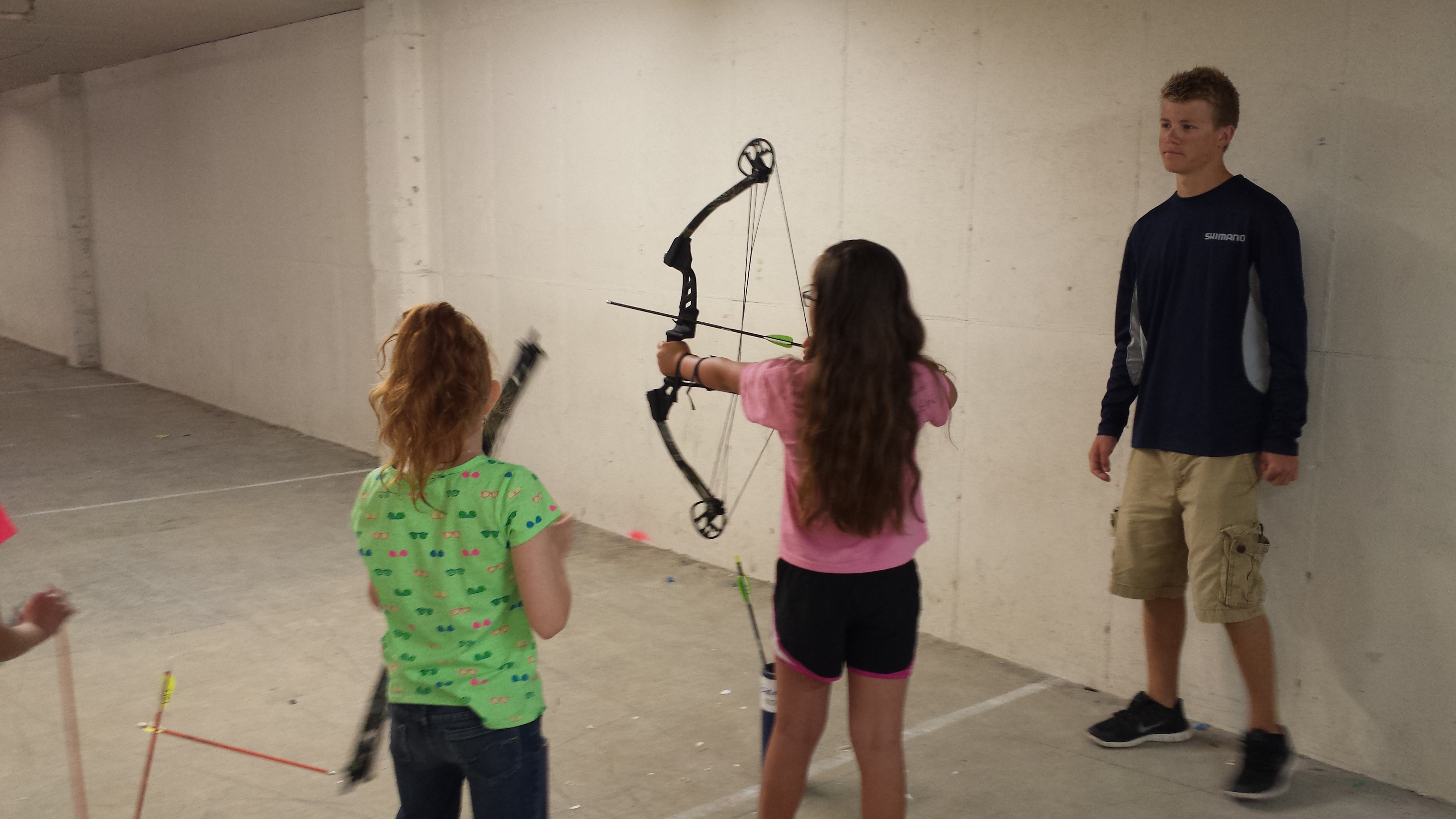
    20140715_101256I am not a fan of direct instruction. I rarely use it in my class, preferring to give information out to small groups in conversations or lead guided discussions. That said I created a “wheel” diagram to show the cycle and relationships of the multitude of causes and consequences of the Great Depression. I taught a twenty minute lesson as I drew it on the board and had students copy it. At the end of the year when I asked students to share their favorite things from the year some of the students brought that up and said that it was really helpful.

    You see, the thing is, as much as I believe in student inquiry and learning along side students, I do have more knowledge and understanding than them on most social studies topics. When it comes to difficult concepts such as economics that they have not had a class in yet, they need some help that I can give them. A good lecture can help frame the big picture for further student inquiry and help clarify complex topics.

    There is space in the PBL framework for direct instruction when appropriate. The key is to realize that it should be used sparingly and lead to student inquiry afterwards. Otherwise it would be like going to an archery class and never getting to pick up the bow.
  • My PBL Pet Peeve

    tumblr_lc9miitY2R1qb5l34
    from blogdailyherald.com

    Andrew Miller wrote about his four PBL pet peeves. I thought I would share mine:

    Shifting to PBL and student-centered learning means that I give up all structure in my class and it turns into a “free for all.”

    Of course teachers don’t actually say it like that. Instead I hear things like “how do I make sure that students learn all of the standards” or “in PBL teachers are ‘guides by the side’ so they don’t ever ‘teach’” or “how do I make sure that students are always ‘on task’” or “what if students choose not to learn about math (or whatever the subject is).”

    Teachers in traditional settings are comfortable with control and order. They have standards to teach and a textbook to use. Many even have district mandated curriculum and pacing guides. All teachers have different comfort levels in the classroom as far as noise, order, and structure. For those teachers who are “type A” personalities, at first glance PBL is scary because it sounds like the teacher is losing control and students are taking over. While we do want students to take ownership of their learning, PBL is a framework for it to happen. By definition, a framework is a structure. PBL can be very structured (and I recommend a high degree of structure when first implementing and introducing it to students) or it can be looser to fit the style of any teacher.

    Examples of the structures included in PBL include the entry event, driving question, and authentic audience. These are created by the teacher and frame where the project is headed. The teacher can decide which assessments will be formative and summative. The teacher also provides workshops when necessary and appropriate and can do them whole class or in small groups for differentiation. The teacher can also introduce other elements of inquiry into any project to bring up important ideas that students might “miss” on their own. Critical friends is an important structure for both teachers and students to provide feedback on their work.

    When I first started using the PBL framework, I went very free and unstructured. My students were new to PBL and couldn’t handle it. They needed support. They came to me begging for it so I gave some structure to them that I gradually removed the rest of the year. Through this I learned that we need to ease kids into PBL and over time they will take more and more ownership and eventually tell you, “we got this, we don’t need facilitators to do this.”

    In a nutshell, PBL is a structure for student centered inquiry, the opposite of a “free for all.”