Tag: Social Emotional Learning

  • When Teachers Choose to Escalate

    Let’s look at a scenario that I think we will all find familiar (I, for one, am guilty of this choice). A student, let’s call him Mike, comes to class agitated. Maybe he got into a fight with his girlfriend, something is blowing up in his home life, or maybe he is returning to class from the office after having been kicked out of a previous class. It could be a myriad of reasons, it really doesn’t matter why. What’s important is that it is obvious he is upset and the cause is not this class or this teacher because he enters the classroom in this state.

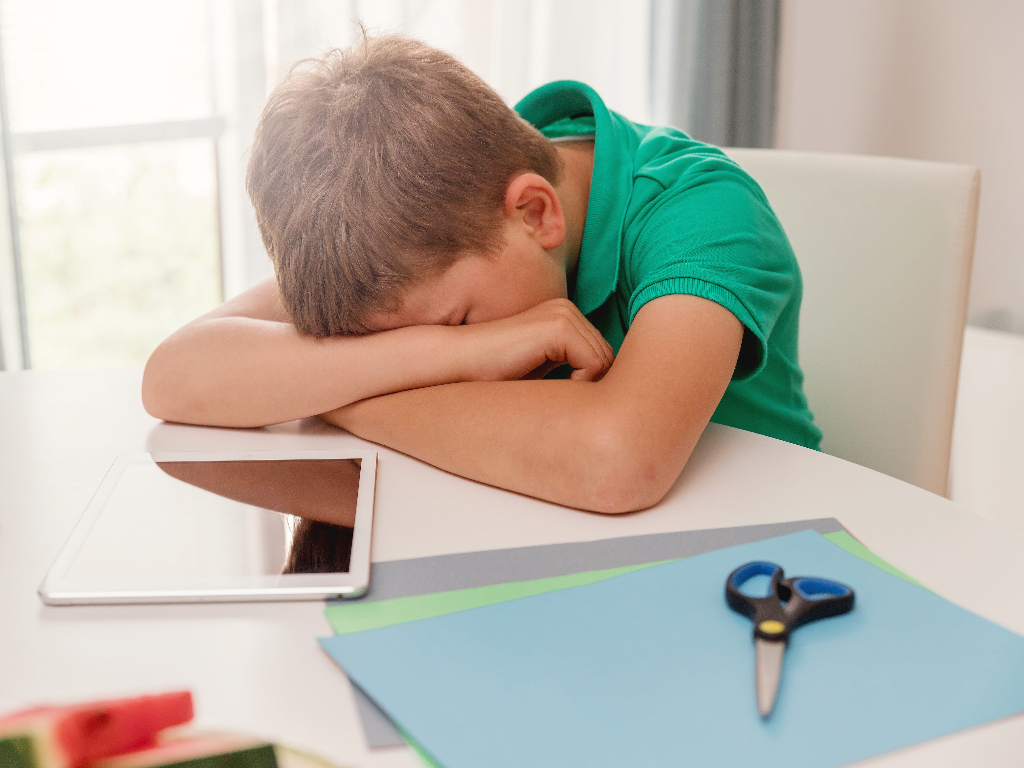
    He goes to his desk and puts his head down and closes his eyes. Maybe this student has a history of being a disruption in class or maybe the teacher is agitated too from last hour’s class, personal stress, or is just tired of dealing with this particular student day after day. The teacher decides today to draw a line, “Mike, sit up and pay attention, please” in that firm teacher voice.

    Mike doesn’t move.

    The teacher walks over so that he is standing over Mike. “Please sit up, open your book, and follow along.”

    Mike still doesn’t budge.

    Getting more stern, “Mike, sit up or I am writing you up.”

    Mike jerks up in his seat and angrily says, “Why don’t you just leave me alone!”

    Teacher in a calm, but passive aggressive voice says, “Mike, I need you to drop the attitude and pay attention.”

    Mike yells, “@%&^ you, why are you always on my case?”

    Teacher in a calm, “winning” voice, “Go to the office right now.”

    The teacher had a choice to be a caring adult and handle this differently. He could have used his own SEL skills to check in with Mike, offer him some space to decompress, or the opportunity to talk to a counselor. Instead the teacher power-tripped, and intentionally escalated Mike to a point where the student’s behavior could be blamed for the consequence that made the teacher’s day easier: removal from class. The teacher has all of the authority in this situation and unless there is a physical alteration, the teacher is always going to win and be backed by administration.

    Hopefully, you can see an analogy to the police and African Americans in the United States. The police have all of the authority and can escalate or accuse at any time to make arrests. The video evidence and statistics prove that this country has a problem with how police treat African Americans, and the judicial system rarely holds the police accountable. This is unacceptable and needs to be changed. But I am not am expert on how that should happen. (See https://8cantwait.org for ideas on changes to be made).

    Sometimes it is easier to get upset by the racism of someone else, like the police, than to examine ourselves. I want to challenge white teachers to look at their classroom management practices. We know that everyone in this country has implicit racial biases (including people of color) that have been conditioned into us from a young age.

    Remember racism is an action that we need to fix, not a judgement of our personal morality.

    Robin Diangelo in White Fragility explains the false good/bad binary about racism: Bad people are racist, and good people are not. By this logic to admit (or be informed of) racist actions is to be a bad person, usually resulting in defensiveness. Instead think of racism as a continuum that everyone is on because of historical institutional racism. Diangelo states, “I am not in a fixed position on the continuum; my position is dictated by what I am actually doing at a given time…Am I actively seeking to interrupt racism in this context?” So all of us need to constantly analyze our actions, admit mistakes, and readjust.

    When you think about your teaching, are the “Mikes” in your classroom primarily students of color? The data shows that black students are suspended at much higher rates than white students. Many studies have shown that black and hispanic students receive harsher consequences for the same actions as white students.

    I don’t believe that most teachers are explicitly targeting black students for referrals, detentions, or suspensions.

    The problem is that this happens implicitly without teachers even thinking about it. My challenge for white teachers is to reflect on your interactions with students, especially those that are most challenging for you. Honestly try to analyze if you are being fair and impartial. Talk it over situations with a trusted colleague who will give you honest feedback. If you have failed, learn from it. If you have a current student who pushes your buttons, try opening a dialogue with them.

    I recommend that white educators learn more about racism. Read some books, listen to podcasts, and do the work to see the perspective of people of color. There are lots of resources for your classroom, but the real work starts inside ourselves on how we can be a part of dismantling racism in schools.

    Questions? Interested in SEL and PBL Consulting?  Connect with me at michaelkaechele.com or @mikekaechele onTwitter.
  • The Power of Class Rituals

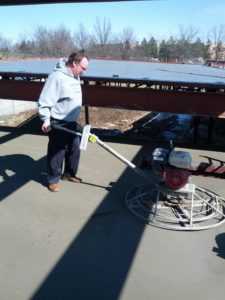
    Me finishing concrete on an addition to our high school. Also crazy hair day!

    The Covid 19 pandemic has turned the world upside down, changing life as we know in ways never dreamed possible. The only comparison that I have is dystopian or disaster movies. In all of the craziness that is now life, we need to find patterns to stabilize us. I was recently reading The Restorative Power of Ritual in the Harvard Business Review about how rituals help humans respond to change and loss. I got to thinking about how important rituals are in the classroom so here is a combination of quotes from the article and applications to the classroom (including online classes).

    First of all, what are classroom rituals? They are not the same as routines and procedures such as where to turn in work and what to do if you missed class yesterday. The purpose of routines and procedures is to help class flow smoothly. Class rituals are different; they create community. Effective rituals build an inclusive culture of safety and belonging.

    In PBL, the processes become rituals in the classroom: entry events, Need to Know lists, and feedback protocols such as the Tuning Protocol or Gallery Walk. These structures create the safety to explore and experiment through out the inquiry phases of a project. But the most important rituals are personal. They are inside jokes and personalized handshakes. In my classroom, our “warmups” were a vital ritual that established the culture of family.

    Rituals give a sense of control and help reduce anxiety and stress.

    Mike Norton, Harvard Business School

    Rituals are particularly powerful for helping deal with uncertain times. They allow people to regulate circumstances that feel overwhelming. One of the most important rituals at our school was ping pong. It started organically with a board leftover from a summer catapult project and a couple of paddles. It turned into a community game of round robin played before and after school and during every break.

    What was amazing about ping pong is that it united students from various backgrounds and created friendships between students who never interacted before. Some of our students that struggled most to “fit in” in high school became friends with the “popular” students. I watched students gain confidence and grow SEL skills through our silly games of ping pong (teachers played too).

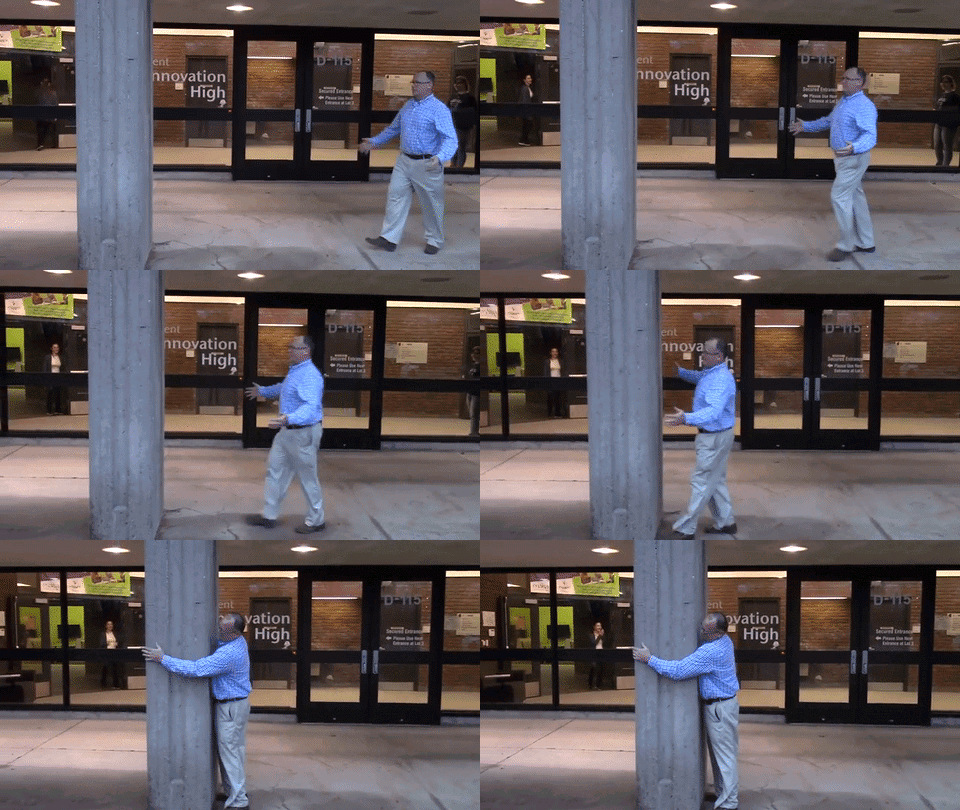
    Another ritual was “teacher hug Thursday.” This was the personal ritual of one student, Jacob. He went around every Thursday and gave all of the teachers and staff in the entire school a hug.

    Gift from Kris who understands me

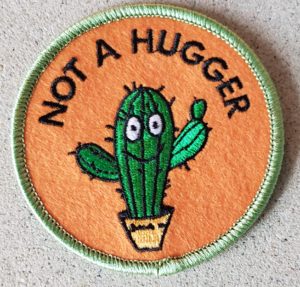
    I am definitely not a hugger. I greatly believe in personal space. I was self distancing, before it was cool! So Jacob and I had our own ritual on Thursday mornings of me running and hiding when I saw him. He would chase me around or ambush me from behind. I always lost and eventually got hugged.

    One day I asked Jacob, “Why? Why do you insist on this strange ritual?” He said, ” I want every teacher to never forget me.” Mission accomplished!

     “Absurd rituals can have high utility. If it helps you create that sense of control, if it calms your anxiety, that’s what matters.”

    Mike Norton, Harvard Business School

    Class rituals can be fun. One colleague of mine ended class with “Throwback Thursdays” by playing music and having all the students participate in a line dance. They can be silly. Our students started making memes of my co-teacher, Mr. Holly, by pasting his face onto internet pics, printing them, and pasting them in random places around the school. My personal favorite was H. Swift (Holly + Taylor Swift).

    Yes, I get the irony of not being a hugger. But notice the joy of the student in the background

    My personal ritual revolved around my previous career in concrete construction. One day I started complaining to my class that it was morally wrong that they painted the concrete columns when they redesigned our building to launch our school. Concrete should be natural.

    Students thought it was strange and funny how I talked about concrete with such passion. So that egged me on to talk about it more. Pretty soon they knew they could get me off on a rabbit trail talking about the difference between concrete and cement.

    The truth is that I don’t love concrete as much as students thought I did (although I did write a poem about it once). Our inside joke about concrete was me being weird about my hobby that gave students the right to be weird about whatever they were into: anime, coding, sports, art. We were all different flavors of nerds.

    “They don’t have to happen organically; you can artificially insert them into your life. “

    Mike Norton, Harvard Business School

    This is the best part. Rituals can happen naturally or be intentionally designed at any time and have the same effect as spontaneous rituals. This is important as millions of teachers and students shift to online learning. Students are stressed and being at home is not a “vacation” for many kids, no matter what their home life is like. So reflect on these questions on how you might use rituals to support students online (now) and in-person (next year).

    • What rituals existed in your face-to-face classroom?
    • How could you adapt them to distance learning?
    • What new rituals might you and your students invent to maintain control and community in uncertain times?

    Questions? Interested in SEL and PBL Consulting?  Connect with me at michaelkaechele.com or @mikekaechele onTwitter.