
Tag: Social Emotional Learning

  • Change the Setting to Change the Mindset

    When we start talking about hot topics, people immediately take sides and get defensive. Most people, let alone students, struggle being truly empathetic and looking at a situation from multiple points of view. Everyone understands their own point of view and oftentimes think that they grasp the opposite side, but usually they don’t. This leads to emotional debates that only entrench people more deeply in their positions. Teaching the SEL competency of Social Awareness is vital if we want to heal divisions in our country and world. We need to build empathy in all of our students.

    How can we talk about important issues without the conversation breaking down into unproductive arguments?

    Once I shared a news article with my students about U.S. soldiers torturing Iraqis at Abu Ghraib prison. But instead of giving them the actual article, I copied and pasted it into a GDoc and changed the setting of the story. I substituted China for the United States and Tibet for Iraq. We read and discussed how horrible the Chinese actions were. I wanted students to commit emotionally to judgement before I revealed that there was something not true about it. Eventually I told them that it wasn’t really about China in Tibet, but the U.S. in Iraq, and gave them the link to the actual article online. Then we looked online at the disgraceful pictures of Abu Ghraib (warning many are graphic). Since I teach thematically, students immediately made the connections to other U.S. atrocities that we had previously studied in the Moros Massacre (Samuel Clemons’ commentary) and My Lai Massacre.

    This bit of deception helped open the minds of some students who initially would have been resistance to any critique of the U.S. military. It allowed them to take their jingoism out of their first impression of the event and evaluate the facts without their instinctive bias. In the end, students were able to more deeply understand why America is unpopular in certain parts of the world.

    A while back, I heard about (don’t remember where) teachers in Israel using “The Troubles” in Ireland to build empathy in their students by studying the complexities of religious (Protestant vs. Catholic) and ethnic (Irish vs. British) strife in another part of the world. The conflict in their own country was too personal and close at hand for students to consider objectively. But by first looking at similar issues abroad, students were able to apply it back to themselves. I think this is a genius approach to teaching empathy.

    This week I listened to Malcolm Gladwell’s Revisionist History Presents: The Limits of Power, an excerpt from his book David and Goliath. This podcast episode focuses on the very topic of escalation between the the Protestants and Catholics in 1970’s Ireland and how the British got involved, and I think that it can be applied to more than Israeli / Palestinian conflict.

    Gladwell explains that a paper, Rebellion and Authority from Leites and Wolf argued that economics was the key factor in dealing with rebellions. It was (still is???) the primary viewpoint of governments and law enforcement at the time. Basically use force to make insurgents feel pain, and they will comply. The feelings and emotions of the people are irrelevant. Gladwell’s excellent storytelling demonstrates the fallacy of this theory (Sidenote: this theory also was behind the U.S. strategy in Vietnam).

    Of course, he has the American struggle for equality and full civil rights in mind, when he wrote this chapter of his book and the parallels are obvious. This podcast would be great to use with students and have them first analyze “The Troubles” and then apply their conclusions to the Black Lives Matter movement and other resistant movements.

    Sometimes we need to change the setting to change the mindset!

    CASEL has recently updated its competencies to reflect the importance of equity. Social Awareness now includes sub categories:

    • Taking others’ perspectives
    • Recognizing strengths in others
    • Demonstrating empathy and compassion
    • Showing concern for the feelings of others
    • Understanding and expressing gratitude
    • Identifying diverse social norms, including unjust ones
    • Recognizing situational demands and opportunities
    • Understanding the influences of organizations and systems on behavior

    I think one of the most important additions is the last bullet point. We need to teach students the legacy of systematic racism. History is not just individuals making decisions, but huge, powerful systems that control and limit options for the disadvantaged. In the United States, public schools are one of these systems. And when it comes to “identifying diverse social norms, including unjust ones,” it is often easier to critique another country than one’s own. Try using “neutral” international settings to build consensus before engaging in partisan domestic issues. The future of democracy may depend on our ability to develop Social Awareness in the next generation!
  • How PBL Gets All Kids in the Game

    School is a game with official “rules” for how to play:

    • Show up every day.
    • Do all of your work (even if it is mindless, busy work).
    • Test well (this is the ultimate part of the game where we decide the “winners”).
    • Figure out what each teacher wants and do it (real talk).
    • Be respectful to adults (compliance over everything; this needs a long post to unpack how much is wrong with how most places define respect and how one-sided it is).

    Everyone in education knows that different students approach the game of school in different ways with various levels of success. The majority of professional development is based on getting a certain segment of the school population to play the game better, aka get higher test scores.

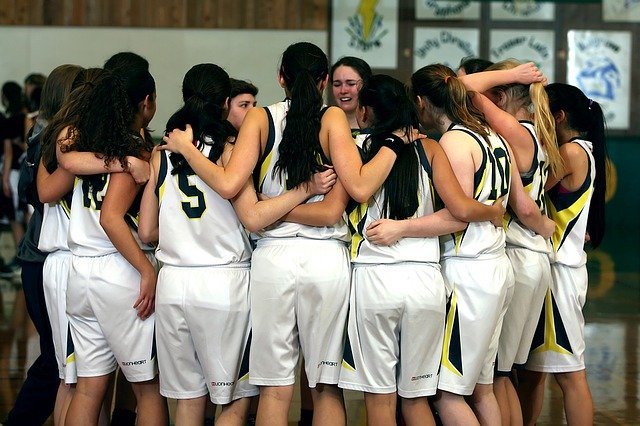
    I want to compare the way school has traditionally been “played” to varsity sports and the way that different kinds of students approach it. At the same time, I want to demonstrate how Project Based Learning (PBL), is all-inclusive, inviting every student to be actively engaged in their learning process. It’s why I believe that PBL is the best structure for education.

    Varsity Athletes

    Varsity Athletes are the traditional high achievers. They know the rules of school and win the game. Everyone knows who they are, not just from varsity letters and rosters (the honor roll) but by how they act in class. They pay attention, studiously take notes, and ask questions in discussions. They come to school to play and compete to be team captain or MVP. They keep track of their stats (grades) and work hard to improve their game.

    Although they are over-achievers as students, varsity athletes are often ball hogs. They may struggle to work with other students and prefer to just do everything themselves. They have the highest GPA but usually lower SEL skills.

    The truth is that varsity athletes will do fine in school no matter what. They have “made the team” their entire life and expect to be successful in school. If you change the rules of the school game to PBL, they will pushback the loudest at first, because they are worried about their stats (grades). PBL feels risky to have new and confusing “rules” to the game of school. But in the end, they will adjust and learn new structures and will perform just fine.

    The bonus for varsity athletes (and the selling point to their concerned parents) is that through PBL they will develop the SEL skills of communication, collaboration, critical thinking, and creativity. They will learn leadership skills through the projects and do meaningful work that looks great on a college application. In short, they will be developing the soft skills that future employers are looking for.

    Team Managers

    Team managers love the game. They want to be a star on the team, but just aren’t athletic enough. They are often stat nerds who collect cards and memorabilia. They are hard working and like being a part of the team.

    Team managers are the type of students who work hard in school, want to be successful, but lack specific skills. They may be unorganized and never turn in their work, even if they complete it. They may actually know lots of content, but perform poorly on tests. They may struggle with a specific skill such as reading, writing, or numeracy. Some of them have official labels like 504 or special education, but others do not.

    Team managers may get cut from the team because of their lack of specific athletic skills. but they have other skills like being a stat nerd. In school, managers may have hands-on expertise like working on cars or art that are often unrecognized in core classes.  PBL gives choices for learning and assessment that honors these students’ strengths. Managers have the opportunity to demonstrate their learning in a multitude of different approaches. PBL uses scaffolding to teach these students SEL skills of organization and academic skills too.

    Non-athletes

    Varsity athletes are a small percentage of the school population, as most kids don’t play on a team. Non athletes are the students who hate sportsball, as they sarcastically call it. They fall into all different “categories” from geeky D&D players to music loving Goths to artsy activists. They may actually be athletic, but focus on non-varsity sports like skateboarding or dance or performing theatre.

    Non athletes may attend events like football games because they are in the band, or just for the social part of hanging out. They don’t understand how to play the game of sportsball, because they have no interest in it. They are passionate about other things.

    Many students are “non athletes” in the classroom. They may be forced to be there or they may enjoy the social aspects of school, but they are disconnected from learning. They may perform to a minimal standard to pass and keep their parents off their back, but given the choice they would literally rather being doing anything else.

    PBL makes learning relevant to these kids. Instead of siloed content with little application, standards are addressed by authentic problems pitched by local partners in the community. Students do work that matters. Voice and choice means that teachers design projects that are both culturally responsive and connected to student passions.

    Many non athletes may be developmentally behind from not “playing.” They have been going through the motions for so long that they are missing basic skills. Others may be English Learners who lack language skills. Through personalized scaffolding in PBL, all students experience engaging content while developing skills. They don’t need boring, abstract remedial lessons, but instead meaningful projects completed in community. PBL draws in students who have never wanted to “play” the game of school before.

    Playground Stars

    Playground stars are athletes, and they know how to play the game. They just never try out for the team. For whatever reason, they play for fun (and dominate) but don’t want to play at school. It may be that they don’t like the coach or a certain teammate. They may have to work a job or have duties at home such as babysitting younger siblings.

    In school, playground stars are potential dropouts. They aren’t necessarily behind academically; they just choose not to engage. Many times they should be in gifted and talented programs (a category that I find problematic) but they rarely show their talent at school.

    A playground star won’t take notes, doesn’t appear to be paying attention, and doesn’t do homework. Yet they get a B on a test without much effort (but a D in class because the teacher weighs HW and participation). Unlike the non athlete who doesn’t really understand the skills and habits to be successful in school, the playground star knows exactly what to do, but doesn’t feel like doing it.

    Playground stars are like non athletes, in that, the missing factor is motivation. They think that school is a waste of time and don’t want to play. But unlike the non athlete, they don’t fake going through the motions of minimal effort. They refuse to participate. Oftentimes they become behavior problems in class. Alternative education is full of playground stars who have rejected the traditional system.

    PBL reaches these kids by giving them a voice in their education. Playground stars don’t hate learning, they hate school. So give them authentic projects with meaningful outcomes. Challenge them to solve real issues in the community. Listen to what they care about and design school around that.

    Playground stars need to be seen. Teachers need to get to know them, developing deep trusting relationships, before they can “coach” them to success. PBL teachers are “player’s coaches.” Relationships come first, fundamentals and the game second.

    Conclusion

    One of the challenges for schools is that most teachers were varsity starters in high school. They didn’t just make the team, they were MVP’s. School worked for them. They loved it and were successful so they went into education. So many teachers assume that there is nothing wrong with the traditional structure of school, and when kids fail it is because of their own actions or character: lazy, distracted, and unmotivated.

    In fact, none of these examples of students are lazy. Non athletes and playground stars work hard in things that they care about. School rarely falls into that category. PBL changes school from a competition of winners and losers to a cooperative game where all students can “win” None of this magically happens by “doing a project.” It requires a transformation of pedagogy including assessment, grades, classroom management, and culturally responsive teaching. It’s time to level the playing field with PBL and make our classrooms places where all kids succeed.

    Questions? Interested in SEL and PBL Consulting?  Connect with me at michaelkaechele.com or @mikekaechele onTwitter.