Tag: Project Based Learning

  • When should you repeat projects?

    Recycling
    Recycling

    When planning a PBL scope and sequence for the year should you repeat projects from previous years or start from scratch? I think there are definitely times when you should repeat projects.

    The most important reason to repeat a project is when you find a great community partner that you want to build relationships with that person or organization. You can organically grow that project year after year. As you and your community partner better understand each other the opportunities for students to go deeper and do more focused work improves. So I definitely would repeat projects that have strong community partners centered around meaningful work.

    Another reason to recycle a project is that although your students change yearly your core content does not. It makes sense to reframe and refocus certain projects, but it does not make sense to start over from scratch every year. One way to do this is to adjust the project. We like to mix up entry events, DQ’s, and final products sometimes. Other times we keep them the same. A local, national, or world event can create a different way to frame a project so that it stays relevant, while keeping most of the workshops and assessments the same.

    The projects that we switch up the most are the ones that seem to fall flat. My most difficult topic is the Spanish American War. It seems small, insignificant, and irrelevant to today. In three years we have tried three different approaches: the first time we had students make Common Craft style videos. The second year we had students debate Manifest Destiny vs. Imperialism as America’s motivation in different countries around the world.

    This past year we ended up combining the Spanish American War with 9/11 monument project. What didn’t change in all three of these projects is that we had students consider how early American expansion was a continuation of Manifest Destiny. We contrasted the language of Manifest Destiny with our imperialistic actions. We then continued to look at American foreign policy through the rest of the twentieth century through this lens.

    Each year I feel like it got better, but to be honest I think I will be re-doing it again next year. So I don’t think there is a right or wrong way to approach project planning. Sometimes you repeat and sometimes you start over. But even when you start over you can still use many of the same resources and workshops by just reframing the entry event, purpose, and audience.
  • Why I am proud of “unpresentable” projects.

    In PBL we often talk about the importance of an audience to drive students to produce high quality work. But I think that we need to consider the goals for each project. I believe there is a time and place for a polished, final product and a time for more of a “rough draft,” conceptual, final product. We need to consider the learning goals behind each final product rather than judge it by how shiny it is.

    A case in point was our American foreign policy monument project that we just completed. We spent five weeks on this project building up background knowledge that we will refer back to for the rest of the year. Even though we spent weeks on the project we only gave students one week to design and build their monument. We did have an authentic audience of architects, engineers, and designers come and look at the pieces while students explained them.

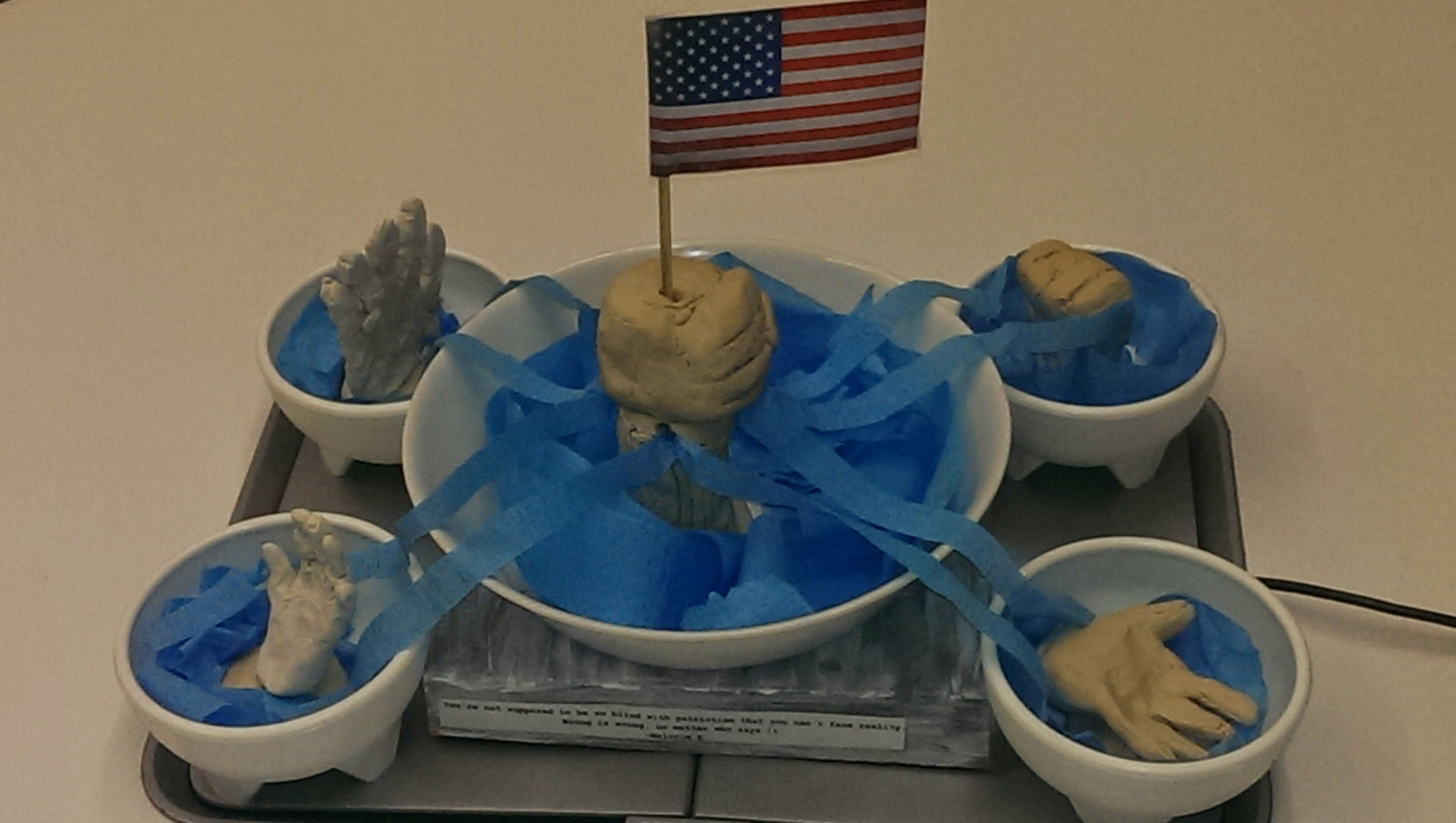
    But the thing is, most of them weren’t pretty. They looked more like craft projects than careful designs. To be clear, I am not criticizing the students here. They did exactly what we wanted them to do. We focused very intently on symbolism and looking at American foreign policy from multiple perspectives including a non-American point of view. We were ok with designs that didn’t look perfect as long as they had some depth in symbolism to them. The picture below is a great example.

    Hands for Humanity
    Hands for Humanity

    It is not all that impressive visually, but if only you could listen to the students who made it. It was one of my favorite pieces and the students showed a depth of understanding of how America acts in the world. Check out their artist statement:

    Our monument is inspired by Greek architecture, the WWII fountain, and the 9/11 memorial. Full scale, our monument would consist of marble pedestals, granite benches, bronze inscribed plaques and bronze hands. Our proposed location will be in the Ellipse Circle, in front of the White House, where it can be a reminder to future presidents of both the triumphs and mistakes of their predecessors.  The hands in the fountains represent the US foreign policy, a fist for brutality, an offering hand for kindness, a thief hand for greed, and a hand holding a flag representing the peoples’ nationalism and America’s want to spread a democratic government. The fountain is symbolism for the US having equal parts of both the good and bad things we’ve done. Inscribed on the fountain are various quotes: (Bold emphasis mine).

    You’re not supposed to be so blind with patriotism that you can’t face reality. Wrong is wrong, no matter who does it or says it. -Malcolm X

    Maybe we ought to consider a Golden Rule in foreign policy: Don’t do to other nations what we don’t want happening to us. We endlessly bomb these countries and then we wonder why they get upset with us? -Ron Paul

    Foreign policy is like human relations, only people know less about each other.   -Joe Biden

    Many American pundits and foreign policy experts love to depict themselves as crusaders for human rights, but it almost always takes the form of condemning other governments, never their own. -Glenn Greenwald

    We did not talk about any of these quotes in class. The students went out and found them. These students understood the nuance that we were trying to communicate that America is neither a hero or villain in the world, but a country that sometimes does great things and sometimes makes horrible mistakes.

    I would argue that this “rough draft” monument is amazing, not because it looks great but because it represents a deep understanding of America’s complex relationships in the world. So rather than focus on the shiny, focus on the purpose that you have for the project.