Category: Uncategorized

  • When things don’t go as planned …

    We talked about racism this week. We have been building up to this moment, waiting until students had been exposed to the struggles and successes of the Civil Rights Movement. I went into class with a plan. We started off by looking at the frisking of Forest Whitaker by The Good, Racist People. We then talked about racism in our society. I was building up for a discussion on topics such as Trayvon Martin and whether or not affirmative action is still needed.

    But that is not where students took the discussion. My plan got sidetracked. They started sharing personal stories of discrimination. We heard from students with mixed races in their families and how their own family members treated then differently. We heard from students who themselves had been discriminated against by strangers. Students were vulnerable and shared private personal things.

    One girl had a boy break up with her when he found out she was Jewish. Another student shared how his deaf parents were called “retarded” just because they can not speak clearly. Other students shared the struggles of siblings with Downs Syndrome being treated as stupid and called names. One boy shared his struggles with ADHD and how he has been picked on for being immature because of things that he can not control. One student shared how she was kicked out of her church youth group when they found out she was LGBT. She had to find a new church to go to that would accept her.

    We never got to the topics that I had planned. It was the best class ever.

    Students felt safe enough to share some of the most painful moments in their life and not be judged. I felt blessed just to listen as I walked around the room handing the microphone from one student to another.

    Things didn’t go as I had planned; they went way better.

    I am thankful for students who will talk about the real stuff in their life. I am thankful to be part of a school that supports them.

    Discrimination may never end in this country but I feel confident that these students will lead us into a better future where we will see it continually decrease.
  • Why we haven’t talked about racism.

    I want my students to talk about racism. What it is. Does it still exist? What does it look like? I want them to discuss stereotypes and prejudice. I want them to debate whether affirmative action is still necessary. I want them to discuss what to do about immigration and to analyze white privilege.

    But I don’t want them to just argue from viewpoints that they already hold mostly based on their family and community background. I have students from rural, urban, and suburban neighborhoods. Some live in areas with virtually no diversity while others live in places with virtually no Caucasians( a different kind of no diversity). I want students to bring their life experiences to the conversation, but that alone is not enough.

    We are in the middle of a project on Civil Rights focusing on the African American perspective. We have not talked about the previously mentioned questions. My students are not ready yet. Many of my white students do not understand the sacrifices made to end segregation by thousands of regular people. Segregation did not end just because MLK gave a speech in DC one day. Many people were abused and many people died in the struggle for equality. My white students need to understand the seriousness of the abuses and the commitment to the struggle.

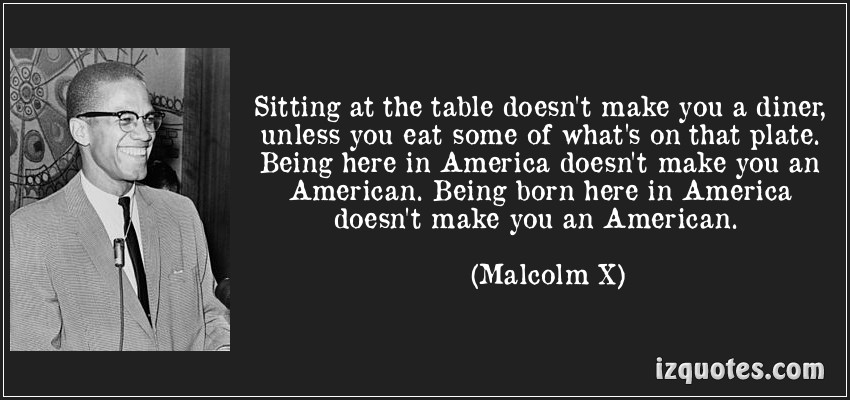
    quote-sitting-at-the-table-doesn-t-make-you-a-diner-unless-you-eat-some-of-what-s-on-that-plate-being-malcolm-x-249363

    Many of my minority students also do not know the history of the Civil Rights movement. They have spent too many years learning about “dead white guys.” They know about Dr. King and Rosa Parks, but they didn’t know this. They don’t know about Booker T. Washington, W.E.B. Dubois, Malcolm X, Bayard Rustin, or the hundreds of students that were Freedom Riders. Minority students are empowered when they read about how people of their race stood up and claimed their right to a “seat at the American table.”

    This is why I teach history. Once all of my students appreciate the struggle for freedom and equality in America, then we will discuss all the current issues of our day. We have worked hard not to turn this project into white guilt but rather a celebration of the everyday heroes who stood up for their inalienable rights. We do not ignore the atrocities of our past but use them to understand how legal equality does not automatically mean actual equality. I want all of my students to be empathetic, compassionate citizens who will shape their part of the world for real equality.

    We haven’t talked about racism yet because we are not quite ready. But we will…