I will never forget the advice that Eric gave me early in my teaching career.
After my first year teaching social studies at an alternative high school, I was laid off due to being the lowest seniority. My principal told me not to worry, that it was just a formality and that I would be brought back in the fall. So I didn’t sweat it or look for another job. At the beginning of August she called and told me the bad news. Unfortunately I would not be brought back due to financial reasons. My wife was 8 and ½ months pregnant with our second child and we would have no health insurance. I was a bit freaked out, not having a job with the start of school fast approaching.
Days before school started I applied and was hired as a technology teacher at the middle school where I student taught. Eric, the previous technology teacher, showed me how the class was designed for students to rotate weekly to different technology and engineering stations (it was STEM before someone invented the term. Does that make me a hipster?).
I was excited, but stressed by my limited time to prepare for this new class and knowing that I would soon be on paternity leave. Eric told me not to worry about knowing how to do all the stations myself. “Just let the kids figure it out on their own,” he told me. “If they get stuck, have them problem solve. Check back in with them later and have them teach you how they did it.” He told me to learn who the students were in the class who became experts at certain stations and refer the other students to them when they had questions.
It was definitely a “fake it ’til you make it” strategy. And I have never stopped using it, because it EMPOWERS students.
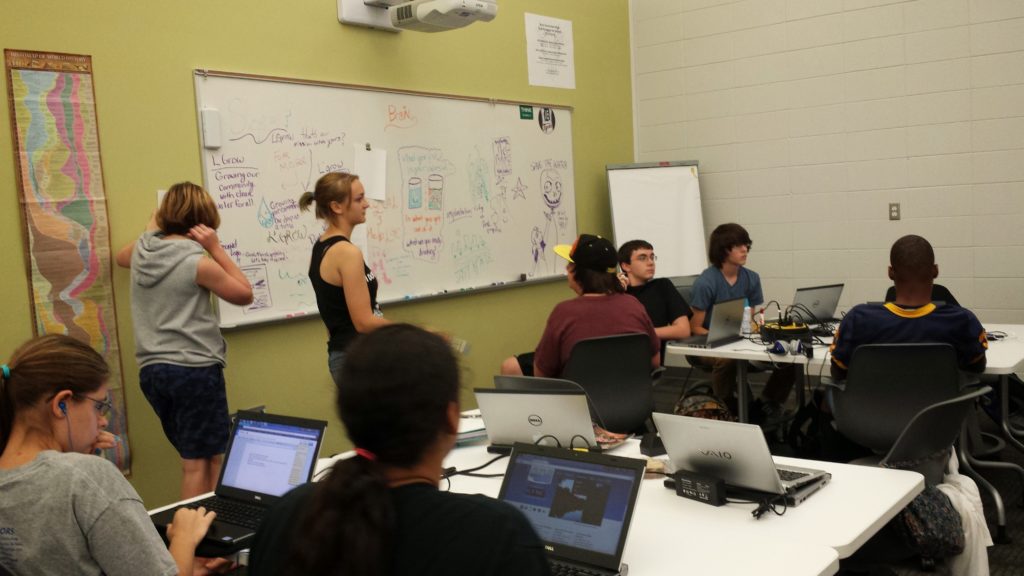
Even when I know how to do something I have my students figure it out on their own or talk to other students. I may point them in a general direction or help them figure out the best search term, but I avoid giving direct answers. It all goes back to “whoever is doing is learning” and I don’t want to steal the chance from students to figure something out by themselves.
This strategy is also freeing because I don’t have to be the expert of everything. I can say, “I don’t know. Let’s figure it out.”
Instead of answering questions, I teach students search strategies to find the answers themselves. In my personal life, I use YouTube all of the time to figure out things that I don’t know, from how to prune my grapes to fixing something on my car. If our students are truly going to become “lifelong learners” than they have to figure out how to ask and answer their own questions.
One thing I will say to students when they ask me a history question that I don’t know the answer to is, “I don’t know. Why don’t you research that and come back and tell me what you find out?” Students are motivated to find things that they can teach me!
A specific example of fake it ‘til you make it, is that I like to use many online tools with students. Instead of using whole class, direct instruction to teach lessons on how to use an online tool, I tell students to figure it out for themselves. I quickly learn which students excel and direct other students to our class expert. I will have these expert students lead a workshop on the online tool for those who may need some help.
This strategy creates a collaborative culture with students depending on each other for help and success. They learn that the teacher doesn’t know everything and is learning too. It also grows confidence in the student experts as they lead workshops for their classmates.
 The recent shooting in the Pittsburgh synagogue has me thinking about when students express hate and what we can do about it. Specifically I remember my first year of teaching.