Author: Michael Kaechele

  • The Power of Class Rituals

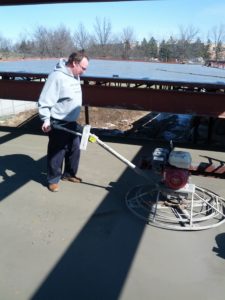
    Me finishing concrete on an addition to our high school. Also crazy hair day!

    The Covid 19 pandemic has turned the world upside down, changing life as we know in ways never dreamed possible. The only comparison that I have is dystopian or disaster movies. In all of the craziness that is now life, we need to find patterns to stabilize us. I was recently reading The Restorative Power of Ritual in the Harvard Business Review about how rituals help humans respond to change and loss. I got to thinking about how important rituals are in the classroom so here is a combination of quotes from the article and applications to the classroom (including online classes).

    First of all, what are classroom rituals? They are not the same as routines and procedures such as where to turn in work and what to do if you missed class yesterday. The purpose of routines and procedures is to help class flow smoothly. Class rituals are different; they create community. Effective rituals build an inclusive culture of safety and belonging.

    In PBL, the processes become rituals in the classroom: entry events, Need to Know lists, and feedback protocols such as the Tuning Protocol or Gallery Walk. These structures create the safety to explore and experiment through out the inquiry phases of a project. But the most important rituals are personal. They are inside jokes and personalized handshakes. In my classroom, our “warmups” were a vital ritual that established the culture of family.

    Rituals give a sense of control and help reduce anxiety and stress.

    Mike Norton, Harvard Business School

    Rituals are particularly powerful for helping deal with uncertain times. They allow people to regulate circumstances that feel overwhelming. One of the most important rituals at our school was ping pong. It started organically with a board leftover from a summer catapult project and a couple of paddles. It turned into a community game of round robin played before and after school and during every break.

    What was amazing about ping pong is that it united students from various backgrounds and created friendships between students who never interacted before. Some of our students that struggled most to “fit in” in high school became friends with the “popular” students. I watched students gain confidence and grow SEL skills through our silly games of ping pong (teachers played too).

    Another ritual was “teacher hug Thursday.” This was the personal ritual of one student, Jacob. He went around every Thursday and gave all of the teachers and staff in the entire school a hug.
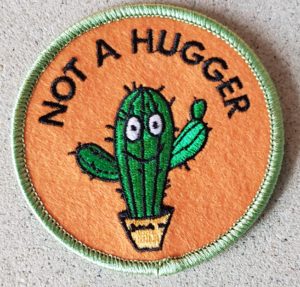
    Gift from Kris who understands me

    I am definitely not a hugger. I greatly believe in personal space. I was self distancing, before it was cool! So Jacob and I had our own ritual on Thursday mornings of me running and hiding when I saw him. He would chase me around or ambush me from behind. I always lost and eventually got hugged.

    One day I asked Jacob, “Why? Why do you insist on this strange ritual?” He said, ” I want every teacher to never forget me.” Mission accomplished!

     “Absurd rituals can have high utility. If it helps you create that sense of control, if it calms your anxiety, that’s what matters.”

    Mike Norton, Harvard Business School

    Class rituals can be fun. One colleague of mine ended class with “Throwback Thursdays” by playing music and having all the students participate in a line dance. They can be silly. Our students started making memes of my co-teacher, Mr. Holly, by pasting his face onto internet pics, printing them, and pasting them in random places around the school. My personal favorite was H. Swift (Holly + Taylor Swift).
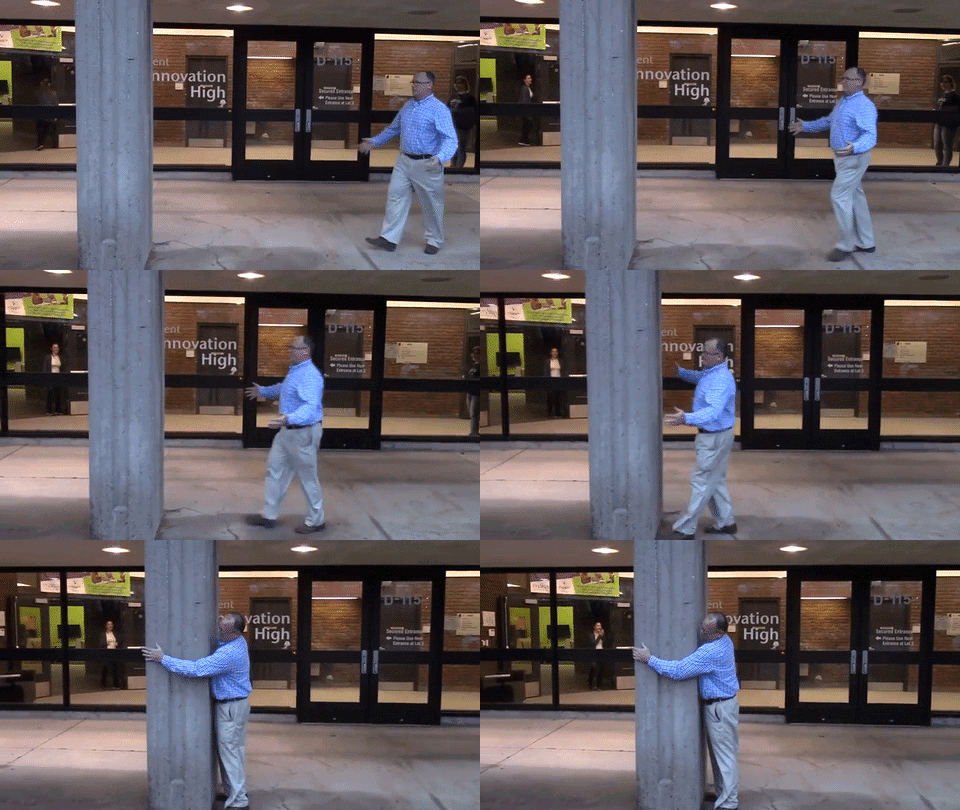
    Yes, I get the irony of not being a hugger. But notice the joy of the student in the background

    My personal ritual revolved around my previous career in concrete construction. One day I started complaining to my class that it was morally wrong that they painted the concrete columns when they redesigned our building to launch our school. Concrete should be natural.

    Students thought it was strange and funny how I talked about concrete with such passion. So that egged me on to talk about it more. Pretty soon they knew they could get me off on a rabbit trail talking about the difference between concrete and cement.

    The truth is that I don’t love concrete as much as students thought I did (although I did write a poem about it once). Our inside joke about concrete was me being weird about my hobby that gave students the right to be weird about whatever they were into: anime, coding, sports, art. We were all different flavors of nerds.

    “They don’t have to happen organically; you can artificially insert them into your life. “

    Mike Norton, Harvard Business School

    This is the best part. Rituals can happen naturally or be intentionally designed at any time and have the same effect as spontaneous rituals. This is important as millions of teachers and students shift to online learning. Students are stressed and being at home is not a “vacation” for many kids, no matter what their home life is like. So reflect on these questions on how you might use rituals to support students online (now) and in-person (next year).

    • What rituals existed in your face-to-face classroom?
    • How could you adapt them to distance learning?
    • What new rituals might you and your students invent to maintain control and community in uncertain times?

    Questions? Interested in SEL and PBL Consulting?  Connect with me at michaelkaechele.com or @mikekaechele onTwitter.

  • 100 Driving Questions and 25 Final Products Related to Covid-19 Pandemic

    Disclaimer: This post assumes that you are already doing responsible online teaching: checking the social and emotional state of your students, giving meaningful feedback but NOT grading their work, and not overwhelming them with too much work.

    What should PBL look like for crisis distance learning? It should include lots of student voice and choice exploring content through their passions. Without the pressure of standardized testing and curriculum requirements, now is the perfect time to try PBL with your students.

    So where should you begin? I made a list of some Driving Questions that could launch student inquiry. I would not recommend giving students this entire list to overwhelm them, but perhaps a subset that are age appropriate. I considered organizing them by subject area, but most integrate multiple subjects so use this as an opportunity to break down those false silos that we call content. So without further ado, here are 100 Driving Questions (link to PDF) to spur your thinking:

    Driving Questions:

    1. How do we balance individuals rights and social responsibility?
    2. What form of government is best situated to handle a pandemic?
    3. How has Federalism led to tension/problems between the federal and state governments?
    4. What should be the roles and responsibilities of each branch of government in an emergency situation?
    5. What are the roles and responsibilities of local government in an emergency situation?
    6. Who should make decisions about quarantines, closing schools and businesses?
    7. What should be the consequences, if any, for people and businesses who ignore quarantines orders?
    8. What is the role of police in emergency situations like coronavirus?
    9. Who should be responsible for an adequate stockpile of PPE for hospitals?
    10. What is the appropriate federal response to the economic ramifications of the pandemic?
    11. Who should receive bailout funds and how much? (Small businesses, large corporations, unemployed, etc.)
    12. What requirements should the government mandate for aid/bailouts?
    13. How does the government stimulus package compare to past government initiatives? (New Deal, Bailout of banks in 2008, etc.) 
    14. Should the government raise or lower taxes and for whom?
    15. Should the government pay for all healthcare during the pandemic as proposed by
      Biden?
    16. Since it is an election year, how has the pandemic become a political issue?
    17. Who should be held responsible for the spread of the pandemic? (WHO, China, US government, etc)
    18. Will the federal government expand its powers and budget after Covid-19 like it did during the New Deal and post-9/11? (new agencies, PPE requirements, social distancing laws)
    19. What is greater, the rights to person freedom or the safety of emergency workers? 
    20. What is the role of the media during a pandemic?
    21. How is quarantine different/similar to the domestic front during war? (Compare to WWI, WWII, and the Cold War)
    22. Why does the United States have such a high percentage of the Covid-19 cases compared to the rest of the world?
    23. How does the high percentage of African-American deaths due to Covid 19 reflect inequity?
    24. What is the purpose and role of the CDC and FDA in potential treatment and vaccine for Covid 19?
    25. What is your daily life like right now?
    26. How has your family’s life changed due to the coronavirus?
    27. Compare your daily life right now to _____________(letters or diaries of people in other important historical times such as the Great Depression or occupation during war).
    28. What should be the requirements before large events like concerts and sports return?
    29. Who should be prioritized to receive coronavirus testing?
    30. Who should be prioritized for access to ventilators?
    31. What is more important, public health and safety or economic growth?
    32. Are the shelter in place orders constitutional?
    33. What future laws/policies should be enacted to protect ourselves from a pandemic?
    34. Should doctors and nurses be able to refuse to work in hotspot areas if they are not provided adequate PPE?
    35. How does the coronavirus show class inequality?
    36. Will our economy rebound? How fast or slowly? What should the government do to help?
    37. Should people be allowed to go to church or other places of worship during a quarantine?
    38. How will coronavirus shift cultural norms? (handshaking, hugging, dancing, group socializing)
    39. Should people be allowed to protest and demonstrate during a quarantine order?
    40. Should the government be allowed to temporarily close businesses during a quarantine?
    41. If a vaccine is developed for Covid 19, should it be mandatory for everyone?
    42. Do you know someone who has died from Covid-19? If yes, how are you handling it?
    43. What is the psychological effect of quarantine?
    44. Describe how your family is growing closer or distancing during quarantine?
    45. What are the similarities and differences to other historical pandemics? (Black Plague, Smallpox to Native Americans, Spanish Flu)
    46. How should schools change in response to crisis distance learning?
    47. Should price gouging be legal in a capitalistic system?
    48. What are the limits of capitalism shown during coronavirus?
    49. Should the US enact tariffs against China due to coronavirus?
    50. What is the role and responsibility of the United States toward other nations during a pandemic?
    51. Should the federal government have the power to nationalize private businesses?
    52. Should the president have the power to declare a national quarantine?
    53. Should the U.S. restrict immigration during a pandemic?
    54. How should the U.S. respond diplomatically to China’s lack of full disclosure of the pandemic?
    55. How should the U.S. prepare for possible future pandemics? 
    56. What is the balance between individual freedoms and the public good?
    57. Should the government have the power to define “essential” businesses?
    58. How has quarantining affected the environment and climate change?
    59. What “new” quarantine habits should we continue after Covid-19?
    60. Why do most plagues originate from animals?
    61. How do viruses make us sick?
    62. How do vaccines work?
    63. How do viruses mutate?
    64. What should be the conditions before “reopening” society?
    65. What is more important: maximizing health or maximizing the economy?
    66. Are government bailouts effective?
    67. Should prisoners be temporarily released?
    68. Why has Covid-19 heavily impacted the Navajo community? 
    69. How does the philosophy of flattening the curve work?
    70. How is the spread of Covid-19 exponential?
    71. How does social distancing slow the spread of a virus? Bonus: entry event
    72. How does the body fight off viruses?
    73. What country has had the best response to Covid-19?
    74. What dystopian novel relates to this pandemic?
    75. Should the federal government “bailout” schools?
    76. How does housing density affect the probability of contracting the virus? 
    77. How does exposure time out of your house affect the probability of contracting the virus?
    78. What is the impact of living in the city vs. living in the country?
    79. What demographic features are most susceptible to Covid-19? (sex, race, age, social-economic status)
    80. What is the acceptable risk level to re-open society?
    81. How can we predict “hotspots” to prepare ahead of time?
    82. Why do people hoard?
    83. Why can’t stores keep toilet paper in stock?
    84. Should the government enact and enforce PPE laws?
    85. How should “essential” businesses be defined?
    86. How should people maintain their physical and mental health while social distancing?
    87. Should we move to mandatory absentee balloting?
    88. How does the pandemic affect global trade?
    89. Should home internet access be a right?
    90. How does the pandemic impact future job markets?
    91. Which companies benefit/suffer from the pandemic?
    92. What is the best response to mass unemployment?
    93. What should be in a pandemic survival kit?
    94. How long does coronavirus live on different surfaces?
    95. Should the federal government let states go bankrupt?
    96. How do we balance federal bailouts and the national debt?
    97. Should we loosen FDA requirements on experimental medicine?
    98. What is the impact of less driving on the environment and the economy?
    99. What will be the permanent economic effects of remote shopping?
    100. What should school look like for 2020-21?

    Final Products:

    What should students create or make as their final product? The possibilities are endless, but here are some ideas that mesh with the DQ’s above:

    1. Simulation where students are the government handling the pandemic
    2. Mathematical charts, graphs, statistics
    3. Diary of your quarantine experience
    4. Dystopian short story critiquing an aspect of the response to the pandemic
    5. Lab experiments to design tests
    6. Economic opinion podcasts
    7. Sketchnote video explaining different government roles
    8. Pros/Cons website
    9. Public Service Announcement targeting greatly affected groups
    10. Proposal for equitable law change
    11. Infographic advocating for behavior change related to physical, mental, or public health or the environment
    12. Quarantine garden or cookbook
    13. Art piece 
    14. Propaganda poster
    15. Digital scrapbook of Covid-19
    16. Poetry about quarantine or the psychological impact of the pandemic
    17. Debate on Zoom or Google Meet
    18. Plan to help a local business adapt and survive the pandemic
    19. Tutorial video on hygiene
    20. Photo essay of your community
    21. App for social distancing
    22. Editorial
    23. Letter to your future self
    24. Regulations for businesses to reopen
    25. Cost/benefit analysis

    Questions? PBL and SEL Consulting?  I can be found at my blog michaelkaechele.com or @mikekaechele onTwitter.