
Student Perspective
While reflecting about how stressful observations and evaluations feel to me, I started thinking about the student experience. How many of my students feel the exact, same way when it comes to taking a test in my class? Are they truly demonstrating their highest levels of comprehension or are they too nervous and stressed to show their actual understanding?
Admittedly, students who have previously struggled in school may act like they don’t feel any pressure for their grades at all, but every student wants to be successful. Other students may have intense pressure from their family or internally to achieve high grades (grade-grubbers). They are driven to perform well, but not necessarily concerned about actually learning.
I think most students approach a test by expecting similar results to past performances. If they have struggled in the past, they expect the test to be a negative reflection on themselves. If they have been successful previously, they expect an A. Both of these expectations are problematic, reflecting closed mindsets. Struggling learners may give up as they lack confidence that they can be successful. Kids who expect high marks may shut down and see themselves as “dumb” the first time they are challenged by a complex assessment.
Even worse some students experience strong anxiety that in some cases leads to the need for medical or counseling services. How can we be helping kids if we are causing them pain?
Alternatives
Standard Based Grading (SBG) or the related Competency Based Grading (CBG) address several of the concerns regarding testing:
- focuses on understanding content standards and demonstrating skills rather than “fluff” such as participation or homework points
- encourages multiple opportunities for reassessment for students to show what they know
- does not penalize students for learning at a slower pace
- reports specific strengths and areas for growth in a transparent way
When we focus on mastering the required content knowledge and skills, we shift the focus from grades to learning. Multiple assessments without penalties recognizes true cognitive understanding of content standards without regard for how long or many attempts needed. This encourages persistence through temporary failures leading to confidence when students do achieve mastery.
Project Based Learning takes SBG and CBG a step further by offering alternative forms of assessment to traditional testing. By placing content and skill acquisition into authentic experiences in the community, PBL provides ample opportunities for students to practice and demonstrate mastery in context. Voice and choice motivates students to show what they know in ways that honor their strengths and passions. I have seen students use music, drama, technology, public speaking, various literature styles, and a plethora of forms of art to show off their learning. These alternative assessments require students to demonstrate their thinking regarding their learning as they explain it to the community.
Of course, the best alternative would be to get rid of grades altogether and focus on learning instead.
No grades is a healthier option and creates students more prepared for the future. It removes the stress of achievement to focus on experiencing and learning. Instead of scores, the focus shifts to informal assessments of what students are learning and doing in PBL. Peers and community members offer feedback to guide the process. Reflection is a powerful self-assessment for students (this blog is my reflection space).
But here’s the thing: Telling people they are missing the mark is not the same as helping them hit the mark.
Bregman and Jacobson
Effective Feedback
Let’s return to the article from my previous post, Feedback Isn’t Enough to Help Your Employees Grow, and apply Bregman and Jacobson’s 4 Steps to Build a Culture of High Performance to the PBL classroom.
Step 1: Shift from critic to ally.
Of course we always start with relationships with kids or this entire process will come off as phony. If students only see us as the source of content knowledge or the person who “gives them grades” then we won’t be able to apply any of the steps. To become an ally, Bregman and Jacobson recommend:
Empathize. If they’re struggling, acknowledge how hard or frustrating or annoying or painful that must be.
Express confidence. Let them know you believe in their ability to handle the challenge they’re facing.
Ask permission. Ask them if they would be willing to think with you about the situation.
Too often teachers swoop in to save the day when students are struggling. Instead acknowledge the challenge while letting students know that they are up to the task. We rarely ask for permission, but this levels the power dynamic, putting the onus on the student to work toward a solution instead of passively depending on the adult to rescue them from any significant thinking.
Example: “I notice your head down on your desk. This math project is difficult, but I know that you got this! Could we talk about some strategies that you might attempt?”
Step 2: Identify an energizing outcome.
This step will be hard if the task you are asking students to do is not authentic or has no purpose beyond your classroom. But if students are collaborating on a project with a community partner, then students have a reason to work through difficulties toward a solution.
Example: “What do you imagine your final product and presentation looking like?”
Step 3: Discover a hidden opportunity.
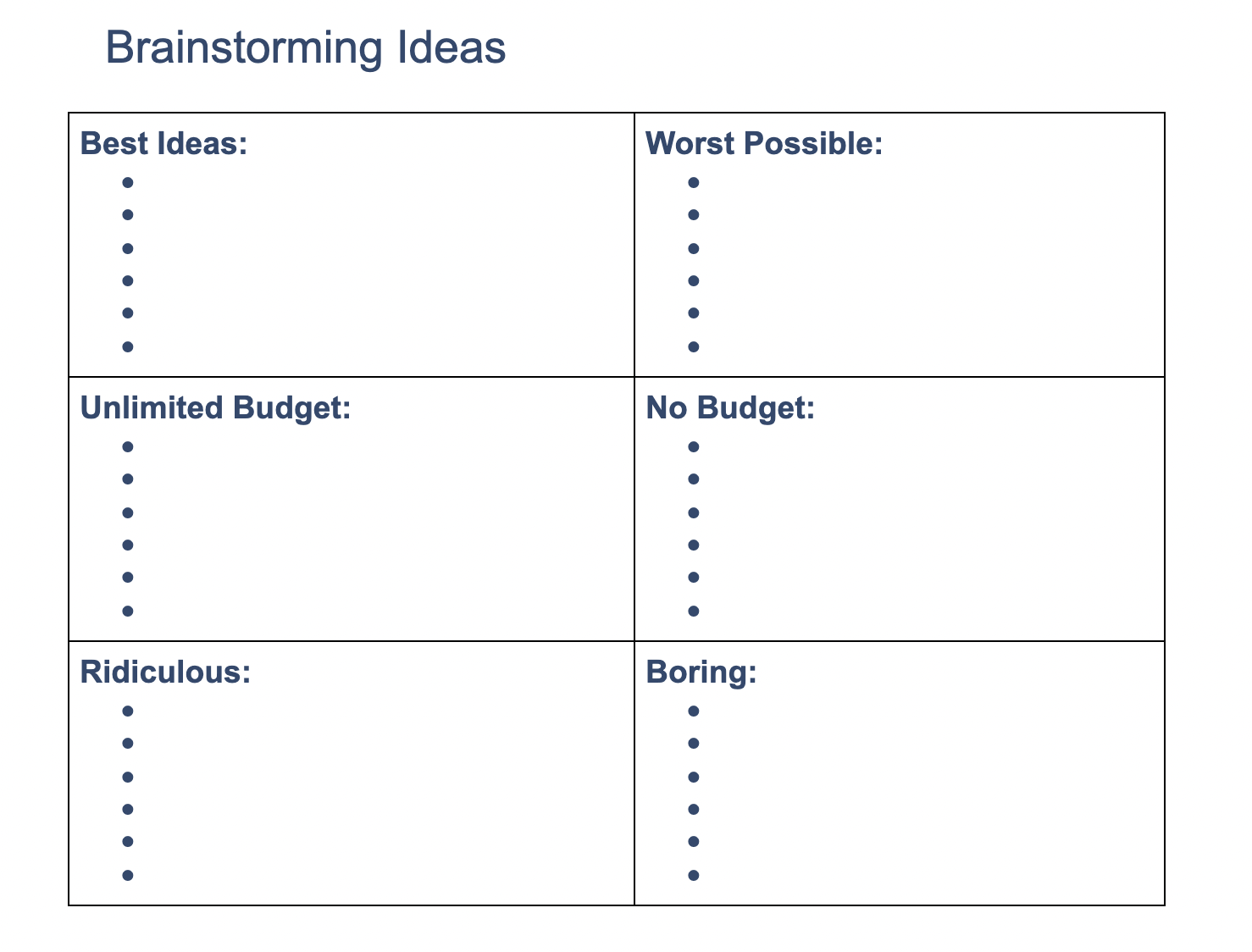
Challenges are an opportunity for student voice and choice. Guide them to brainstorm different ways to approach the problem. Encourage divergent thinking by asking them to brainstorm from different perspectives such as worst possible or most ridiculous ideas.
Example: “So you have a great concept for a final product. How is today’s roadblock a chance for a creative solution to the Driving Question?”
Step 4: Create a level-10 plan.
Level 10 means that on a scale of 1-10, students chose 10 as the likelihood that they will accomplish the plan. We are asking students to commit to a path that they have chosen.
Most student groups will need some support in creating a plan from you, especially if they are new to PBL. I like the question “What would it take to get there?” as a starting point. Have students use their team scrum board to list out steps and assign responsibilities. This gives them structure and ownership while allowing you access to both their plan and their progress.
Example: “What would it take for you to complete your ideal final product? Let’s plot out the steps in your scrum board and divide up the work.”
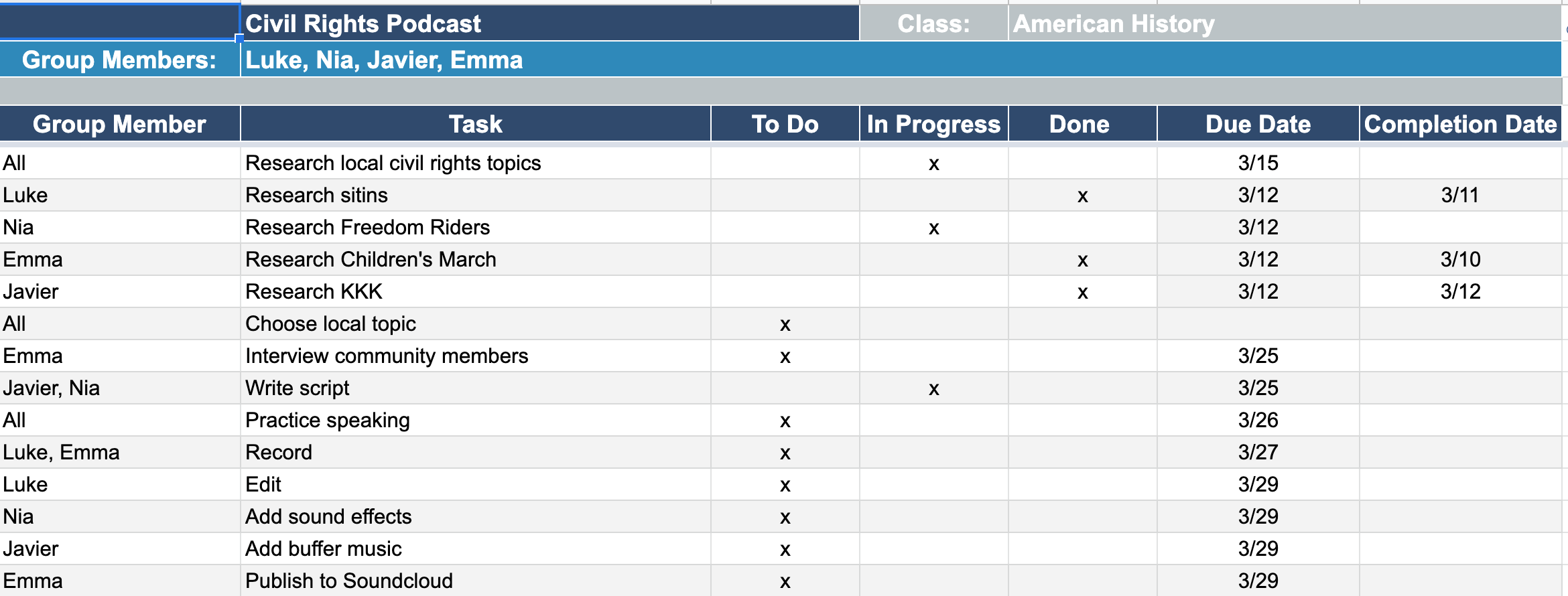
Check back on student groups daily to see how they are moving toward their goals. With time and practice, students will be able to move through this process independently when they get stuck.
Learn with me!
Interested in more SEL and PBL tips? I continue to offer virtual and in person coaching and workshops throughout the school year outside of my teaching commitments and am now scheduling for the summer! Let’s chat about how I can customize PD to energize your teachers to infuse SEL into meaningful PBL.