Tag: pbl

  • Recycling Old Projects

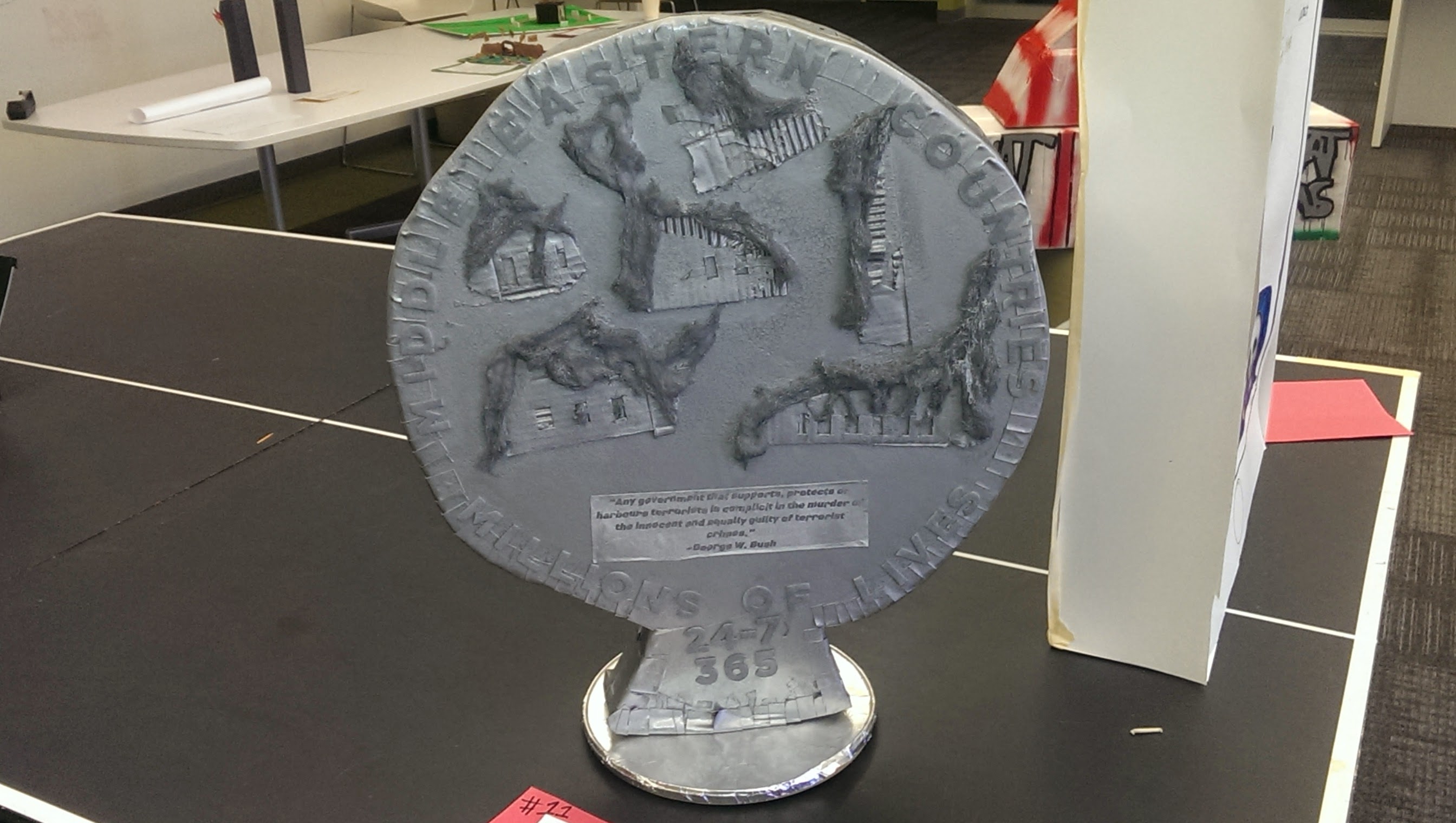
    "Two sides of the same coin" One side shows 9/11 and the other side shows American acts of aggression.
    “Two sides of the same coin” One side shows 9/11 and the other side shows American acts of aggression.

    Sometimes old projects can be repeated and sometimes they need a makeover. In the past we did a 12 week study of American foreign policy starting with the Spanish American War (SAW) and ending with Middle Eastern conflict today.  It was too long and students could not see the relevance of the SAW part until the end. So this year we did one project combining SAW and 9/11.  We also read Ender’s Game to tie it all together.

    We have always struggled to bring relevance to SAW as it is obscure and not given much space in most classes. We believe that it is vital in showing the beginning of American policy of intervention around the world, often by imperialistic means. We had students explore whether the United States was motivated more by Manifest Destiny or Imperialism through out the past 100 years in specific interventions.
    IMAG0220 (1)
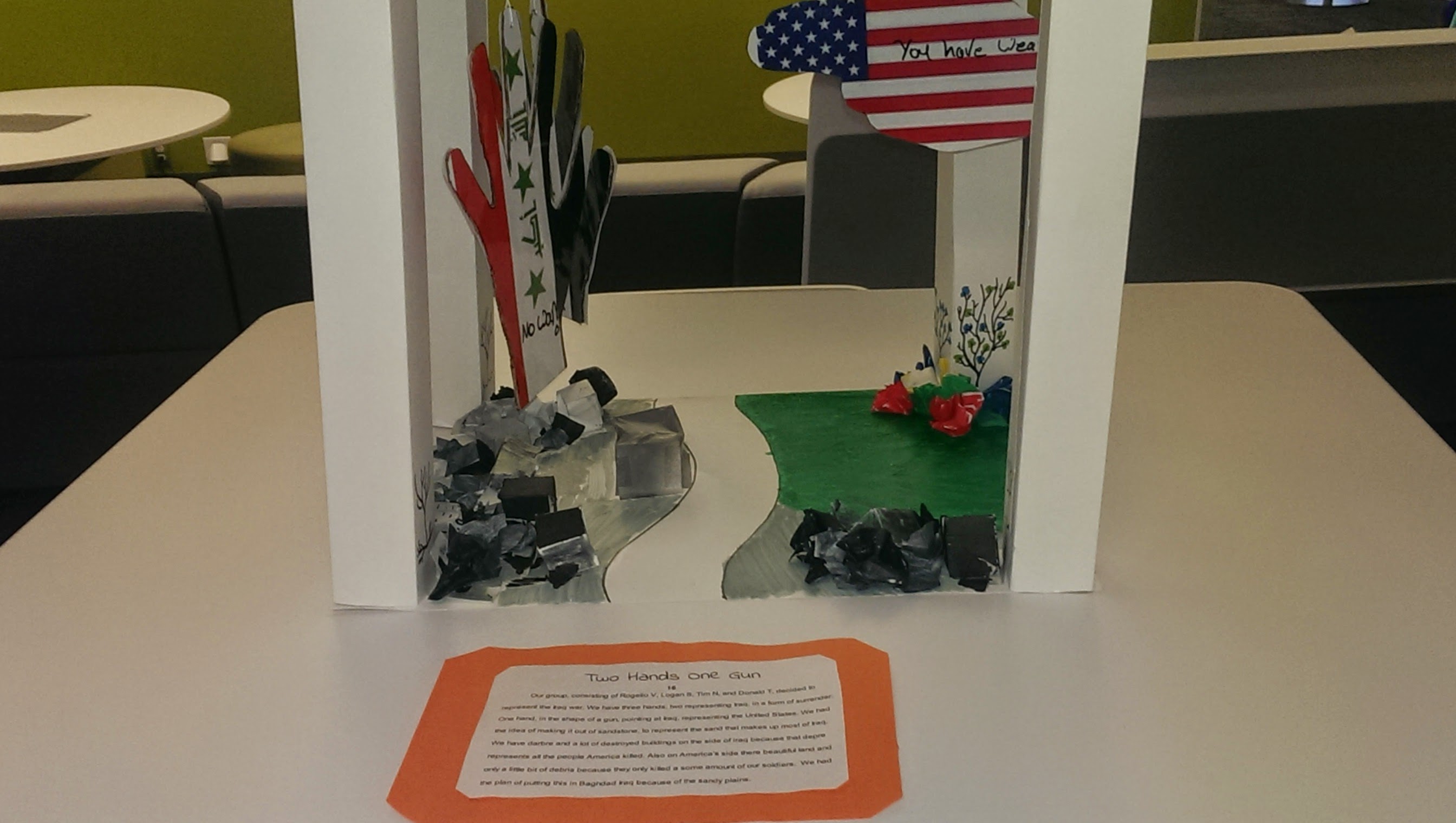
    “Two hand, one gun” Perspective on our relationships with Iraq

    The final product was a monument as “Speaker for the Dead” (from Ender’s Game) where they had to represent American foreign policy from multiple viewpoints including a non-American view. They also needed to have symbolism reflected in their piece. Students were challenged to look at America as not always “good” or a “hero” but consider the complexity of our actions and realize that we have made both good and poor decisions through out our history.
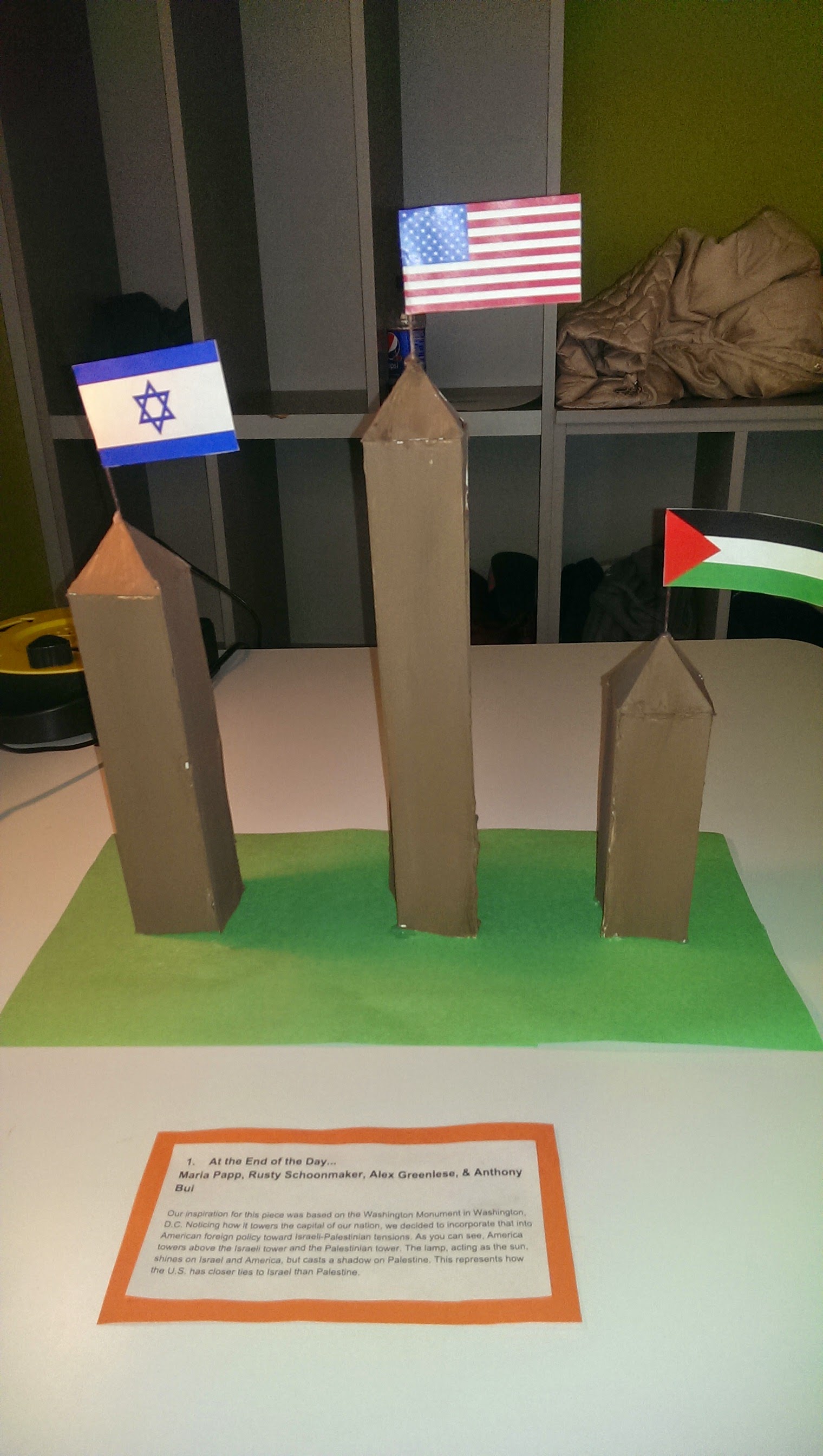
    "America's shadow" The shadow of America is on Palestine but as time passes it shifts to Israel representing a hope for balance in our actions there.
    “America’s shadow” The shadow of America is on Palestine but as time passes it shifts to Israel representing a hope for balance in our actions there.

    Previously students made monuments only based on 9/11 and many of them looked similar. By giving them more options (yeah voice and choice!) we had better variety and deeper analysis from students. We are definitely happy with the results of these “recycled” projects. Sometimes we fail in our first attempt on PBL but often we just need to re-package it in a more student friendly way. Student voice and choice is always important to making this happen.

    Do you re-use projects? How have you successfully (or unsuccessfully) recycled a project?
  • Direct Instruction in PBL

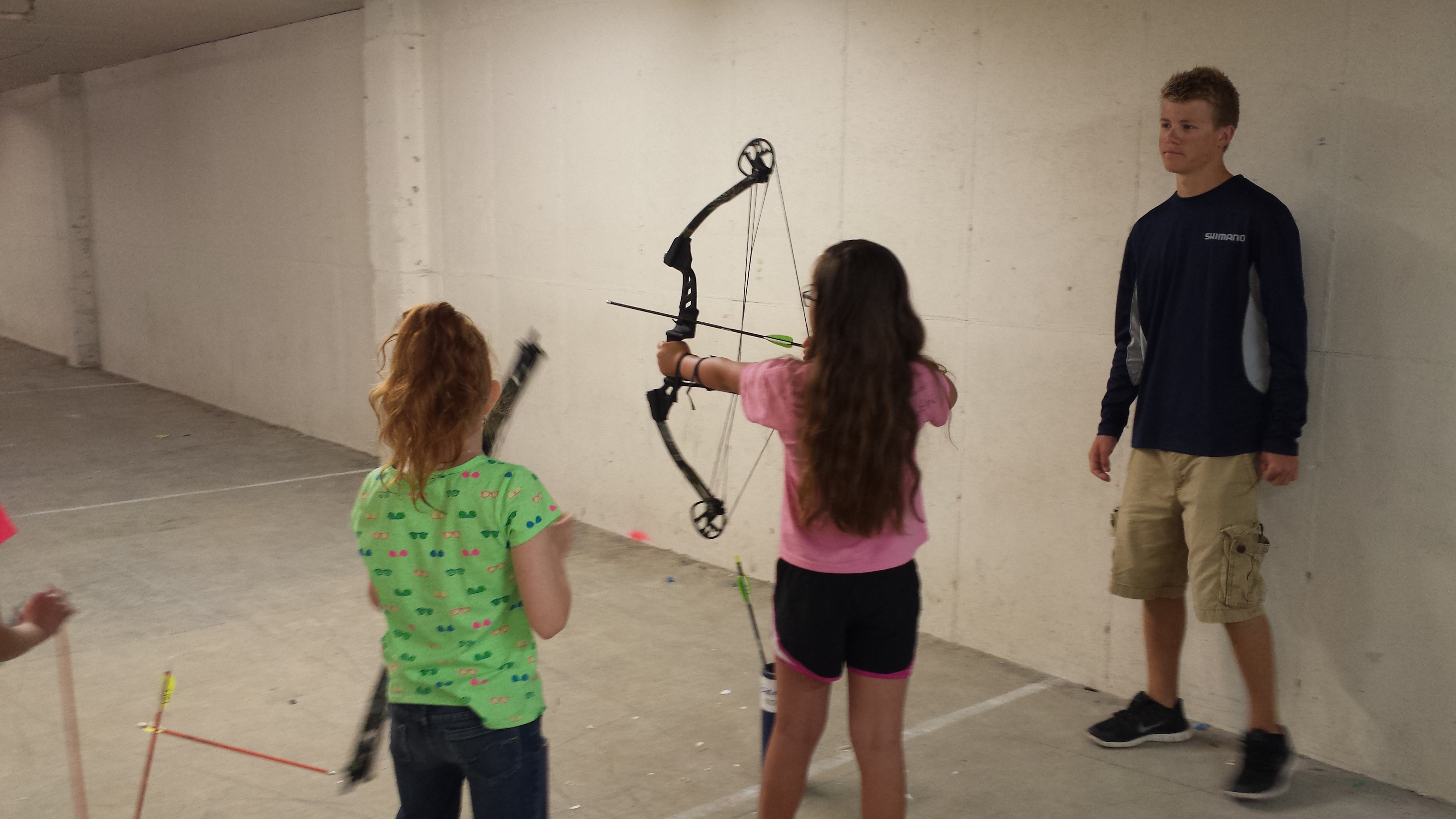
    I took my daughter to class today. It was the first one of what I expected to be a “hands on” class. But she had to sit and listen for a half hour before she did anything. It was an archery class, and before the instructor was going to give over a dozen, upper elementary students weapons in close corridors, he was going to make sure that they understood all of the safety rules.

    Archery is supposed to be fun, shooting at targets, instead she had to sit and listen to some direct instruction. There is a time and place for direct instruction and in this case it was a matter of safety. She did get to shoot later and next time she will get to shoot more.

    20140715_101256I am not a fan of direct instruction. I rarely use it in my class, preferring to give information out to small groups in conversations or lead guided discussions. That said I created a “wheel” diagram to show the cycle and relationships of the multitude of causes and consequences of the Great Depression. I taught a twenty minute lesson as I drew it on the board and had students copy it. At the end of the year when I asked students to share their favorite things from the year some of the students brought that up and said that it was really helpful.

    You see, the thing is, as much as I believe in student inquiry and learning along side students, I do have more knowledge and understanding than them on most social studies topics. When it comes to difficult concepts such as economics that they have not had a class in yet, they need some help that I can give them. A good lecture can help frame the big picture for further student inquiry and help clarify complex topics.

    There is space in the PBL framework for direct instruction when appropriate. The key is to realize that it should be used sparingly and lead to student inquiry afterwards. Otherwise it would be like going to an archery class and never getting to pick up the bow.