Tag: #miched

  • When should you repeat projects?

    Recycling
    Recycling

    When planning a PBL scope and sequence for the year should you repeat projects from previous years or start from scratch? I think there are definitely times when you should repeat projects.

    The most important reason to repeat a project is when you find a great community partner that you want to build relationships with that person or organization. You can organically grow that project year after year. As you and your community partner better understand each other the opportunities for students to go deeper and do more focused work improves. So I definitely would repeat projects that have strong community partners centered around meaningful work.

    Another reason to recycle a project is that although your students change yearly your core content does not. It makes sense to reframe and refocus certain projects, but it does not make sense to start over from scratch every year. One way to do this is to adjust the project. We like to mix up entry events, DQ’s, and final products sometimes. Other times we keep them the same. A local, national, or world event can create a different way to frame a project so that it stays relevant, while keeping most of the workshops and assessments the same.

    The projects that we switch up the most are the ones that seem to fall flat. My most difficult topic is the Spanish American War. It seems small, insignificant, and irrelevant to today. In three years we have tried three different approaches: the first time we had students make Common Craft style videos. The second year we had students debate Manifest Destiny vs. Imperialism as America’s motivation in different countries around the world.

    This past year we ended up combining the Spanish American War with 9/11 monument project. What didn’t change in all three of these projects is that we had students consider how early American expansion was a continuation of Manifest Destiny. We contrasted the language of Manifest Destiny with our imperialistic actions. We then continued to look at American foreign policy through the rest of the twentieth century through this lens.

    Each year I feel like it got better, but to be honest I think I will be re-doing it again next year. So I don’t think there is a right or wrong way to approach project planning. Sometimes you repeat and sometimes you start over. But even when you start over you can still use many of the same resources and workshops by just reframing the entry event, purpose, and audience.
  • Why a MakerSpace?

    Last summer at a rented house in Evert, Michigan some #michED folks had an “Unplugg’d” weekend. We talked about how to help make the MACUL conference more of a place for people to interact, connect, and reflect rather than just sit and listen to presentations. The idea of a makerspace was thrown out as an inviting way to get people to connect and reflect. Kit Hard, Jeff Bush, and I decided to make it happen.

    After months of Google Hangout sessions, a trial run at NovaNow, and the addition of Ben Rimes to our wolfpack it came to fruition last Friday. With the help of many volunteers (huge shoutout to our #michED friends) including both teachers and students, we hosted the MACUL MakerSpace. We felt like it was a huge success as attendees spent time “playing,” creating, designing, and connecting.

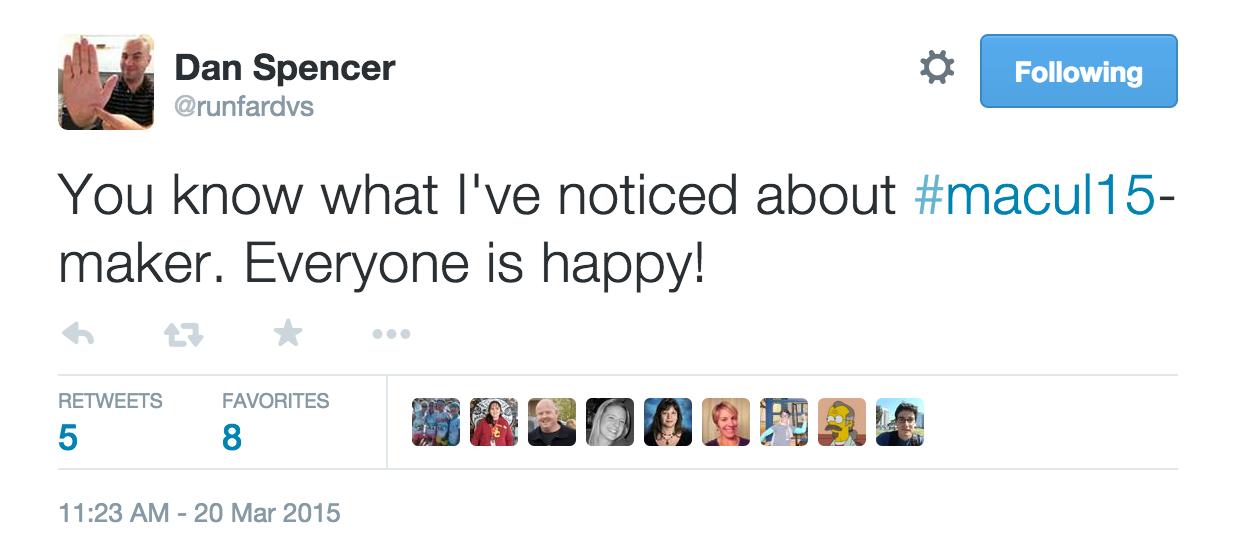
    My friend Dan Spencer summarized it best:

    Screen Shot 2015-03-22 at 5.18.45 PM

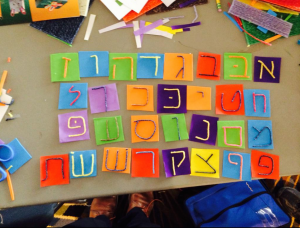
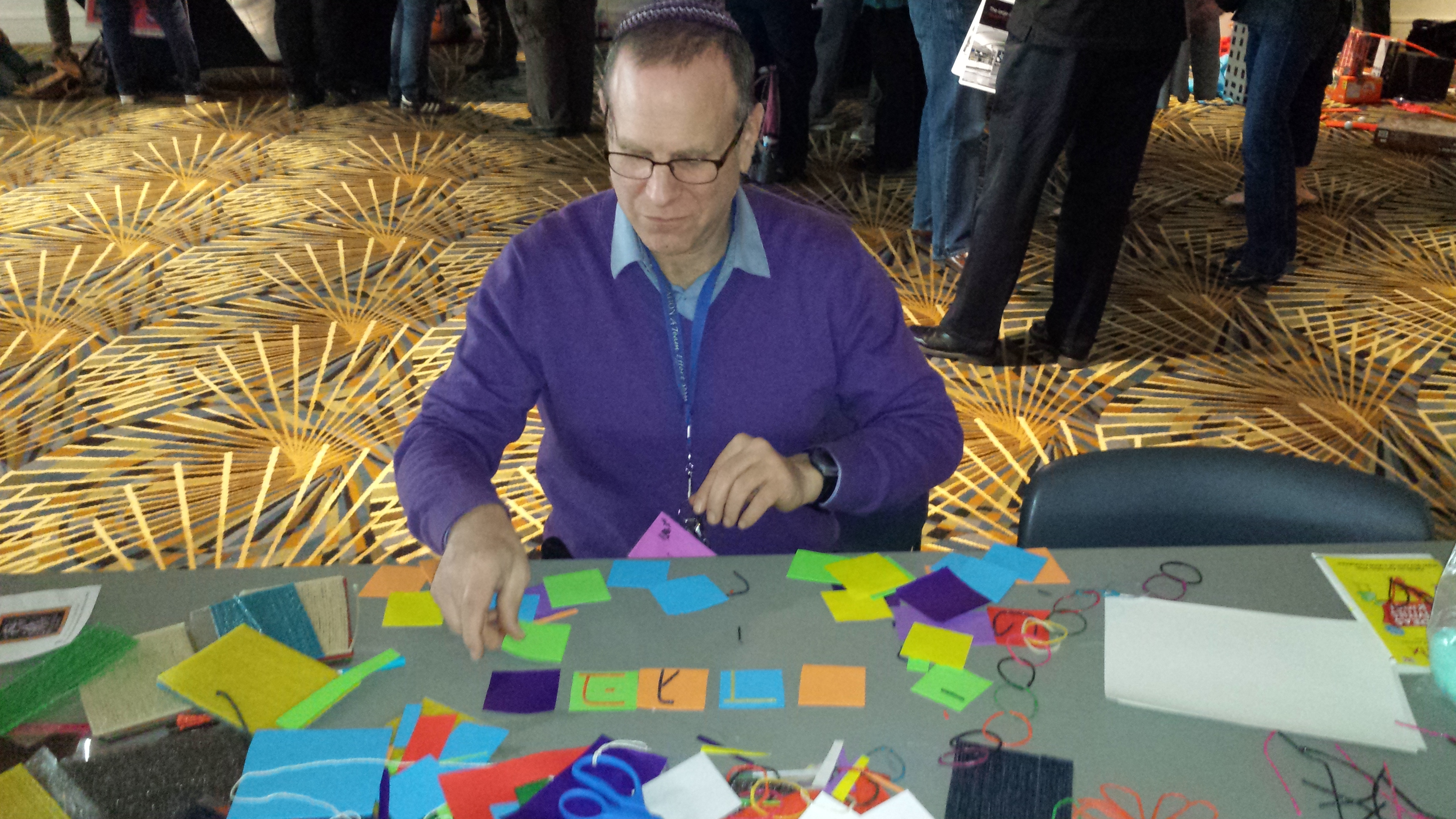
    I would like to share one story that exemplifies what happened in the space. My friend Rachelle met Aron, a Hebrew teacher, as he visited the MakerSpace. She explained to him about QR Codes so he could access our resources. Aron started playing with Wikkistix and making Hebrew letters on foam board.20150320_103537

    I talked to Aron and he explained that he was going to have students who struggled with Hebrew make these letters and then take pictures of them. Then he is going to post them digitally along with a recording of himself pronouncing the letters correctly. He was so excited by the combination of the tactile making with digital curation to help students. Aron ended up staying in the Maker Space all afternoon and kept plugging away until he finished the whole alphabet!

    Screen Shot 2015-03-22 at 5.22.18 PM

    Aron was so excited and so passionate about learning while doing! Aron definitely will bring back an exciting change to his students. At the same time Aron was able to process and reflect on his time at MACUL. He also connected with Rachelle and I. We are glad to have met Aron and look forward to learning with him in the future! Never in my wildest dreams would I have guessed that this would be a result of creating a MakerSpace. It is a great example of how people can creatively explore and learn when given the space and opportunity.

    See this post for more about #MACUL15-maker Space including time lapse videos, a reflection by @BillVanLooTeach on making our sign, and the Storify of Tweets.