Category: PBL

  • Pinch me

    This week was my first week on my new job.  Other than being excited to meet my new teaching partners, I was not entirely sure what to expect. I was blown away this week by the opportunity before me. The new high school is set up and funded by the intermediate school district for the county. I don’t know if this structure exists in other states but in Michigan there is an intermediate school district for every county that provides support and special services for all of the school districts. For example our ISD provides a career tech center for high schoolers and has many consultants on practically any education topic imaginable.

    I spent a lot of time this week meeting all of these people. They were great. Everyone was friendly, helpful, and truly enjoys their work. They were also excited about our new PBL high school. My principal described it best: it felt I was Harry Potter when he first arrived at Hogsworth. Everyone knows who you are and is excited to meet you because you are a teacher in the new school.

    As my colleagues and I brainstormed ideas for our new school we constantly met experts who can help us on all of the logistics and training that we need. We met all of the superintendents and the head of IT. We were told how much money was invested into remodeling our space and that we are getting the latest technology in our wing of the building. Of course the most amazing thing to me is I am getting paid for the whole rest of the school year for professional development and to collaboratively develop curriculum with the other teachers. I have never felt more supported professionally in my life.

    Guilt has been mentioned by some of my new colleagues. In Michigan, just like the rest of the country, thousands of teachers are being laid off and the governor wants to cut per pupil spending by over $700. There is a dark cloud over teachers and education right now. But I do not feel guilty at all. I feel I am a part of something important. We will be a lab school to show all of our districts the possibilities of PBL for all learners. I will not apologize for a school being started in the “right” way.

    The perfect shot
    by Lorenia

    I feel valued, important, energized, and honored. All of the planning, time, money, and resources are not for me, but for students. I am working for the same wage as my previous job (and I am sure will be working much harder). I gave up my tenure to come to this position. I am not getting merit pay. I am working extra weeks in the summer (with extra pay) because I want to be a part of this. I am truly blessed. I know that every student who enters our school in the fall is going to feel the same way about the opportunity to come here.

    Hey politicians, you want to “fix” schools? Treat teachers as professionals. Give them great teaching resources and collaborative professional development. Then get out of their way and let them do their jobs! We don’t need merit pay, we need the professional support and opportunities to dream incredible learning opportunities for students. And yeah it is going to cost some money to create these kind of schools, but our kids deserve nothing less.
  • Housing Theme

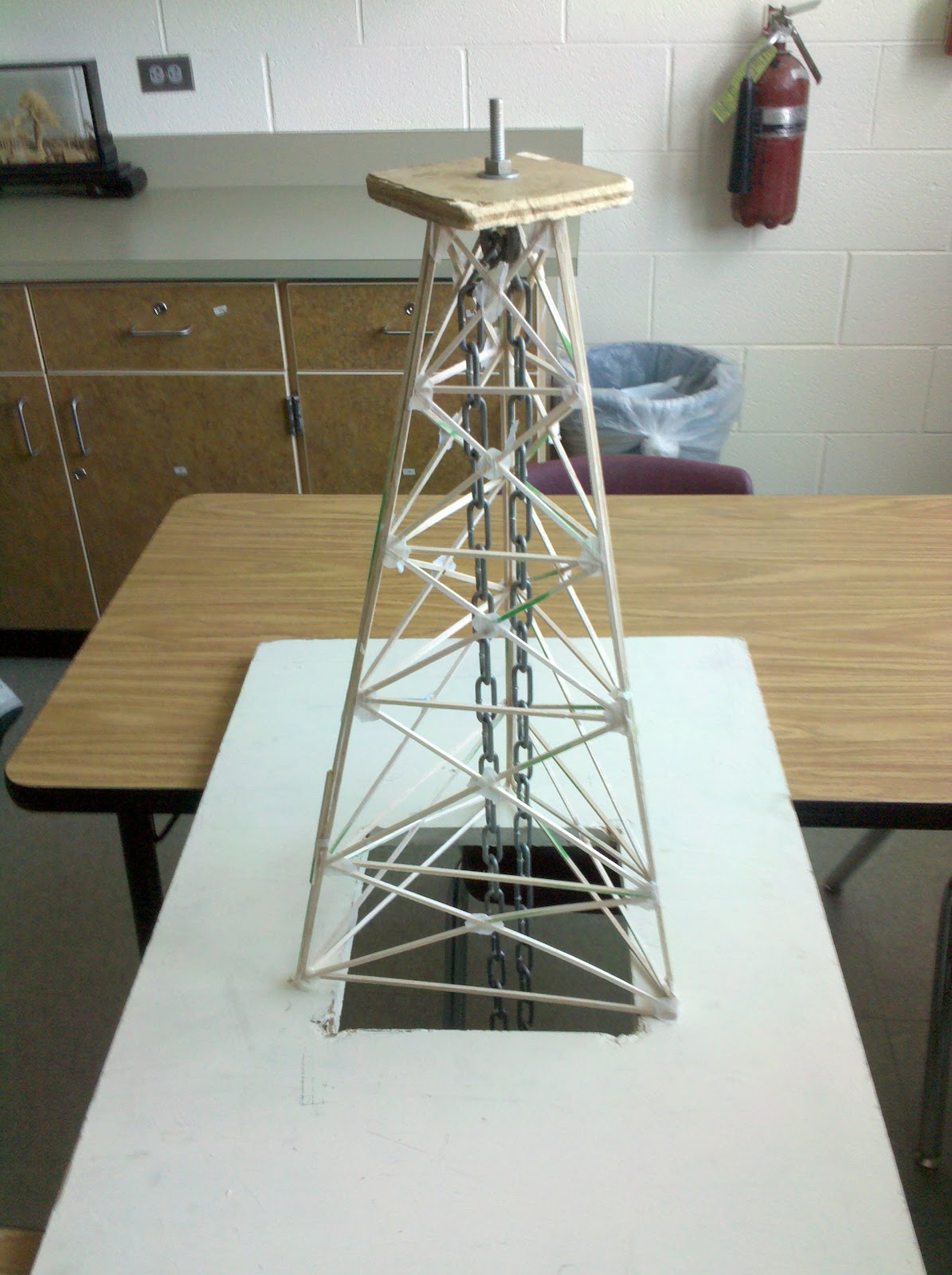
    In my 8th grade applied technology class we do a unit where we build balsa towers. We start off talking about the history of building and architecture while investigating the strongest shapes that make up buildings. Students then research different design ideas on the web. We talk about the science concepts behind the project daily with opening discussions about force, mass, center of mass, loads, and buckling. Students draw their towers to scale measuring the angles and lengths to calculate whether or not they will have enough sticks to complete their design. After we break the towers students calculate whose tower was the most efficient. At the end I have had students write letters to our local mayor designing a tower for tourism or blog about their experience on our class blog. So we integrate math, science, history, and language arts into one project where students research, design, build, destroy, and evaluate.
    But this project lacks a few things that I would ideally (see my ideals listed here) like to see: not enough student choice, the projects all tend to look the same, and too much of the structure of the unit is pre-designed by me. So I would like to expand this idea to a larger theme that could be taught by a single teacher, perhaps in an elementary setting, or by a team of teachers at any level. I like the idea of “theme” better than “unit” because I envision the teachers having some idea of what will happen but the students influencing the process so that where it goes and ends up is open-ended. 
    For starters it would be a theme on housing. The unit would look at what kinds of dwellings humans choose to live in. It would emphasize the political, social, economical, cultural, and environmental factors that influence these choices. I was originally going to separate these suggestions by subject area but they are too intertwined so I will just list some possibilities. This theme is designed to fit an “all day” integrated project not just a one hour class.
    • Housing could be looked at in terms of the history of architecture from different countries, climates, and/or cultures around the world. 
    • Students could watch films like Garbage Warrior to learn about modern, environmentally friendly building methods. This film also brings up the problem of strict building codes limiting innovation.
    • Students could analyze the role of government in establishing building standards and codes and influencing building policy through laws and incentives. They could look at the advantages of quality control vs. the disadvantage of limiting innovation.
    • Students could study how the environment effects the shelter needs of humans in different climates. For example they could learn how and why Inuits chose to make igloos and Mongolians make yurts. 
    • Students could learn about recycled homes or innovative urban designs like this Chinese egg.
    • Students could learn about differences in impact between single family homes and multi family complexes and even communes.
    • Students could look at children’s bedrooms around the world to compare differences in living standards.
    • Students could learn about the millions of people who have no “home” but live in shelters, shanty towns, refugee camps, or even in garbage dumps.
    • Students could learn how toxic or carcinogenic materials have been used in construction.
    • Students could go on local field trips to view historic and/or modern architecture. Students could visit “green” buildings.
    • Students could watch this TED talk about how the differences in engineering in Haiti and Chile led to contrasting results from the recent earthquakes. 
    • Students could interview architects, construction workers, and engineers in person or through Skype. 
    • Students could learn about differences between LEED, Green Built, zero energy, and passive home designs. They could analyze how much of these programs are political and how much of them are actually environmentally responsible.
    • Students could analyze statistics about how humans live across the globe. Then they could create an infograph about how the choice of materials effects human health and the environment.
    • Students could research the dwellings of indigenous people and compare them. Students could have debates whether modern or indigenous dwellings are better for human life and the environment. 
    • Students could perform energy audits of their own homes figuring out the volume and square footage of their homes and finding cost/ square foot to heat and cool their homes.
    • Students might study an important architect such as Frank Lloyd Wright or a branch of design such as feng shuai.
    Every group of students would not do all of these things but different groups would choose the topics that are most interesting to them and even suggest other ideas. Some students might choose to branch off into related topics such as environmentalism, capitalism, architecture, interior decorating, sustainable native plants, etc. The directions this project could go are almost endless. Hopefully it is obvious that intertwined in all of these ideas is math, science, social studies, language arts along with art and technology.
    The cumulative project would be for teams to use what they learn to design, draw blueprints, and make a scale model of an ideal ecological dwelling (like this example). It may or may not look like a conventional house with conventional materials. It could be influenced from any of these activities from cultures around the world. Students would also have to provide a budget for the estimated cost of the materials of the home. They would have to show the energy consumed. Students would also present their homes to their peers (and broader audiences through social media) and describe the benefits of their models.
    These are my thoughts for a practical theme based on my key beliefs of the best practices of student learning. What are your thoughts? What would you add/subtract? How could this theme or a different one be used for student-centered learning in your classroom?
    cross-posted at TeachPaperless Blog