Blog

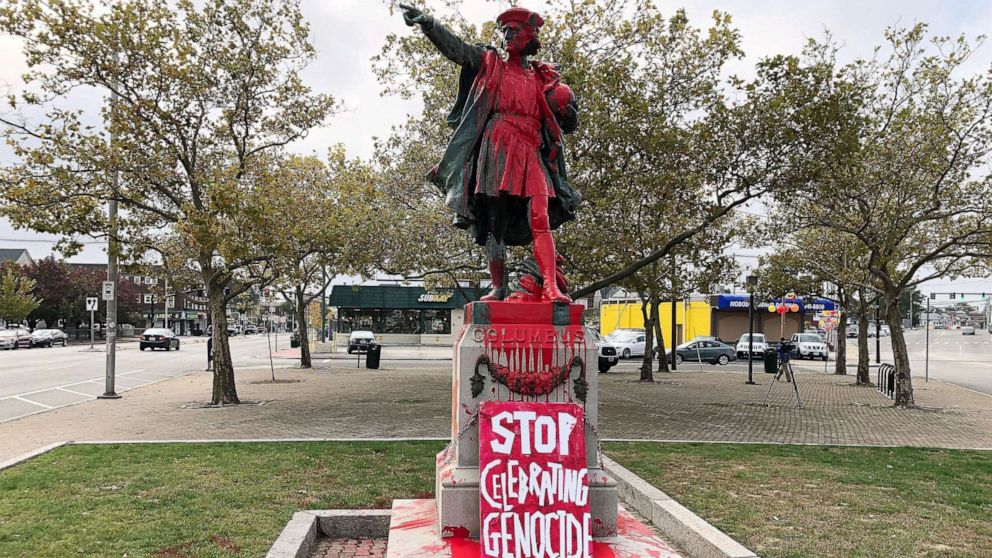
  • Christopher Columbus, American Hero???

    https://images.app.goo.gl/KLHjvSGGUbZMw1Gb6

    Nine years ago I was in my first year at a newly opened PBL school. My students were bused in from twenty districts across the county representing urban, suburban, and rural areas. We had a diversity of race, gender, and political views.

    On Columbus Day, I decided to do a one-off lesson from the project that we were working on. So at the beginning of class I asked, “Does anyone know what day it is?”

    When no one responded, I hinted, “Today is the celebration of a great man, a hero.” Finally someone unenthusiastically responded, “It’s Columbus Day.”

    “That’s correct, and today we are going to learn about this great American hero.” I kept emphasizing this point while trying to keep a straight face. Meanwhile I noticed that my Hispanic students were giving me the side eye. Internally I was smiling because I knew that would change soon.

    “Let’s read about Columbus from some primary and secondary source documents. We are going to read what the Catholic priest, Bartolome de las Casas, who traveled with him, wrote about Columbus and his men when he ‘discovered’ the new world.”

    Without any more context I shared selections of his writings in GDocs and students read and discussed in their groups. Many of the students were surprised to hear about this side of Columbus. I remember one white, female student who came from a rural school in a segregated area, telling me in shock that she had never been taught anything about this before.

    I know that many teachers now teach a realistic version of Columbus, but I want to address a few reasons why this approach to history is vitally important.

    Culturally Responsive

    It is crucial that our approach to teaching represents multiple viewpoints. The diversity of our society (whether or not your classroom is itself diverse) demands that all kinds of students see themselves represented in history, and not just during the months dedicated to it.

    We need less mythology and more accurate telling of events.

    For our students of color, they need to see how their races and ethnicities contributed to history in positive ways. They also deserve to learn about how their ancestors were systematically oppressed and held back. White students need to see the truth of how they have always had advantages in society, and the racist justifications behind it. It is not about guilt, but honesty in telling the story of our country. The teacher need not take a side or cast judgment, but is obligated to tell the entire history.

    Skill building

    Cultural responsive teaching is not just about studying different cultures. Using hip hop or rap to relate to students is not the only way (or perhaps even the best way) to relate to kids. Zaretta Hammond doesn’t give a checklist of “how to be culturally responsive” but emphasized that it is a mindset. A critical part of this mindset is high expectations built on trusting relationships.

    But the other key aspect is teaching high level academic skills such as researching primary sources. To be culturally responsive, is to present all students with high level academic tasks that are engaging, not boring. It is also teaching students how to do them! Giving them concept maps and using thinking routines as structures to guide them in deep inquiry. Of course PBL is a great framework to implement skill building in any content area.

    Critical Thinking

    Notice that during this lesson, I never gave my view of Christopher Columbus. I let the sources do the talking. Most textbooks and elementary versions of Columbus whitewash him as some great man that is a myth. So I felt no need to tell that side of the story. Students were already very familiar with it. They analyzed the writing and made their own judgements about him. Students were able to interpret Columbus for themselves based on what he and his contemporaries reported.

    On another note, I still was biased. I have a negative view of Columbus and that shone through in my tone, approach, and the resources that I chose. And there is nothing wrong with that! We should not treat every aspect of history as something to debate because that gives legitimacy to both sides. We don’t need to give a balanced view of slavery, imperialism, or the Holocaust because they were negative events. There is a time and place for nuanced critiques, but for many other topics there is a clear cut moral judgement.

    Let’s Connect

    Questions? Interested in SEL and PBL workshops or consulting on remote learning?  Connect with me at  michaelkaechele.com or @mikekaechele.
  • What can all teachers learn from PBL with our youngest learners?

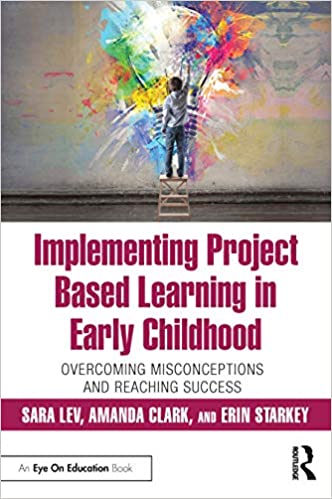
    I just finished reading Implementing Project Based Learning in Early Childhood by my amazing PBLWorks colleagues Sara Lev, Amanda Clark , and Erin Starkey. First of all, this book is a must read for any elementary teacher, especially PK-2. The book is organized around common concerns (misconception actually) about PBL that the authors have heard from other elementary teachers. Not surprisingly, they are the same concerns about PBL that I hear from secondary teachers 🙂

    What I like the most is that the entire book tells the story of a project in Sara’s transitional kindergarten class. “Seeing” how she plans, implements, and adjusts the project for her students based on their abilities and interests clearly models what PBL can be. Sara is a master of planning like the Professor, but pivoting like Tokyo.

    As a secondary teacher, I think sometimes high school teachers focus too much on content. Elementary teachers tend to focus more on holistic teaching of the whole child. A couple of common early elementary practices stood out to me as missing from many middle and high school classrooms. Here’s 5 things all PBL teachers should use:

    1. Anchor Charts

    I never hear high school teachers use this term. Rarely middle school teachers (usually those certified K-8) use anchor charts. Why don’t secondary teachers document student discussions and thinking with anchor charts for all to see? Instead whole group “discussions” tend to be teacher dominated by lectures and slides.

    So I did a little research and found this post that describes how to use anchor charts at the secondary level. I think that they make a ton of sense at all levels and are especially helpful for English Learners. Another alternative that I could see is having student groups develop their own anchor charts to organize and demonstrate their learning. They would make an excellent formative assessment to quickly see if students understand a concept or process.

    2. Observations

    One of the most powerful tools that teachers have is their ability to observe students and analyze their needs. Of course in the teacher-dominated classroom this rarely happens because all we would see is bored kids taking notes. But in PBL, conferencing with students, listening to conversations, and watching groups attack problems are high value formative assessments to not only gauge learning, but pivot toward student interests, ideas, and needs.

    Listening is the most underrated formative assessment.

    3. Illustrations

    We know that visuals are an important way for humans to process informations. Many classrooms use different types of illustrations, but I don’t think there can ever be too many. Drawings, art, diagrams, charts, graphs, timelines, multi-media, infographs, concept maps are great ways to engage in content in any subject area. Students should be analyzing and creating visual content in every class.

    Illustrations should be a part of both formative and summative assessments. I would have my students draw answers to essay questions and have them verbally explain them to me. This honored the content knowledge of my students who may not have been the strongest writers, but understood the social studies content. Illustrations can be especially helpful for special education students and English learners.

    4. Choice Time

    We know that play is a great way to learn. Kindergarten rooms are full of objects for kids to interactive with in a tactile way. Secondary rooms are often sterile with only desks and chairs. Ask most secondary kids their favorite class and it probably has some “junk” in it: Art, shop, plants and animals in biology, woodworking, computers, lab equipment, drama props, etc.

    Sometimes teachers let students do something “fun” like games if they complete their work early, but the authors advocate for unstructured choice time being an integral part of the learning. Many teachers are terrified of the word “unstructured” but the difference is that kindergarten rooms are full of engaging items to play with.

    What if middle and high school rooms had interesting items for play?

    It is important to note that Sara sets out specific items depending on what they are doing in class. For example she puts out a bin full of instruments when they were studying music and blocks, rulers, and measuring tapes when they were designing their outdoor classroom. What the casual observer might not realize is that Sara uses this choice time to listen to her students practice the vocabulary that they are learning and having casual conversations about the project. Then she pivots the project based on these formative assessments of their conversations.

    The popular genius hour is a version of choice time, but I think that it should be more hands on and tactile like in a STEM lab. At the secondary level this might look like a set of primary source pictures or old objects in history or students designing their own experiments in science. ELA probably does the best job of this with choice reading. Math may be the most difficult, but one option is letting students free design with a tool like Desmos. The main thing missing at the secondary level is the space and materials to allow students to play.

    5. Space

    Intentionally leave space for student voice and choice in projects. I love how Sara didn’t even plan all of her standards ahead of time, but found standards to add to her project based on the choices that students made in the middle of it. Other times she made something that she had planned feel like it spontaneously came from her students. None of this is possible if our planning calendar is packed full, using every minute of the day. Instead leave space to pivot to student needs and passions. Anticipate areas for student choice and intentionally plan out time for it.

    “We don’t give voice…It is our job to create learning environments where children are encouraged and supported to make their voices heard.”

    Lev, Clark, & Starkey

    Implementing Project Based Learning in Early Childhood is a great read full of practical PBL advice for teachers of all levels. Go get yourself a copy, you won’t regret it! Wondering how to teach ECPBL remotely? Check out this Facebook group where Sara is sharing what she is doing this year.

    Let’s Connect

    Questions? Interested in SEL and PBL workshops or consulting on remote learning?  Connect with me at  michaelkaechele.com or @mikekaechele.